
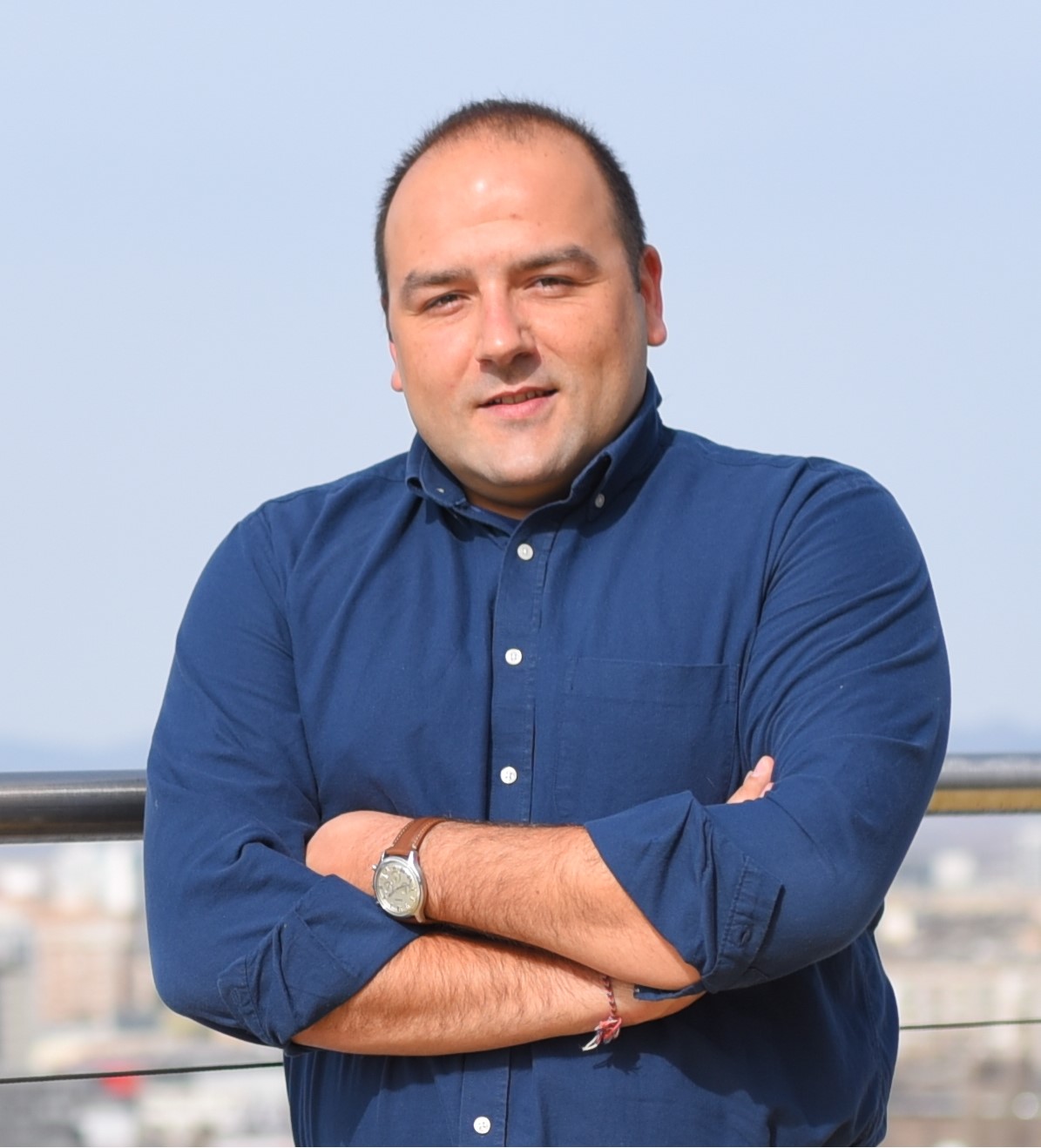
Prof. Kamen Kozarev is the newly elected director of the Institute of Astronomy with the National Astronomical Observatory at the Bulgarian Academy of Sciences. His scientific work focuses on solar and heliospheric physics, and especially on solar flares, coronal shock waves, the acceleration and transport of high-energy particles, and the application of modern data processing methods and artificial intelligence in radio astronomy and space weather.
His professional career includes many years of research experience in the United States. He worked as a doctoral student and postdoctoral fellow at Boston University and the Harvard -Smithsonian Center for Astrophysics, where he developed numerical models for the acceleration of charged particles in coronal and interplanetary shock waves and analyzed ultraviolet and radio observations of the Sun from space and ground-based telescopes. After returning to Bulgaria, he successively held the positions of senior assistant, associate professor, and professor at the Institute of Astronomy with NAO – BAS, and supervised doctoral students.
The scientific work of his research group covers the development and application of automated systems for analyzing solar flares, building online catalogs and databases, and integrating observations from modern instruments such as the LOFAR and MWA radio telescopes with simulation physical models. He is actively working on the creation of methodologies for the early detection and characterization of solar flares and for predicting high-energy particle fluxes in the heliosphere.
Prof. Kamen Kozarev has received international scientific awards and is an active member of European and American professional organizations in the field of geophysics and astronomy. His work contributes to the development of Bulgaria’s scientific infrastructure and to the country’s integration into major European and global research initiatives in the field of solar physics and space weather.
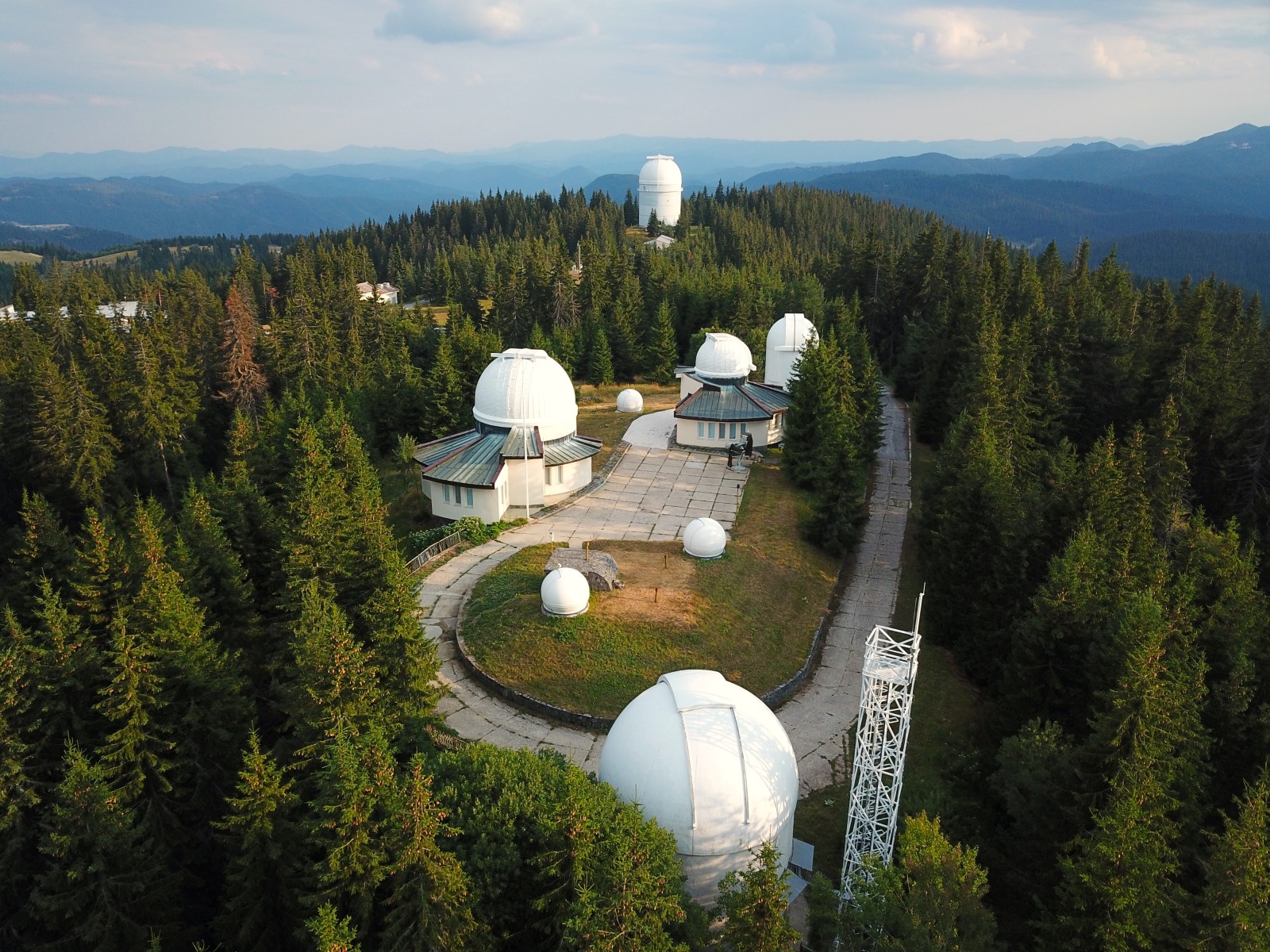
The main objectives of his management program are related to strengthening the international scientific competitiveness and visibility of the institute; effective, transparent, and modern management; ensuring stable and diversified funding; updating and developing the observational and digital infrastructure, as well as the building stock, to the European level of a modern national scientific research institution; Making the IA with NAO a more attractive place to work and develop for specialists, attracting productive young and established scientists of world renown; Deeper internationalisation and integration into European scientific infrastructures and programmes; Making the IA with NAO even more recognisable to the general public through active promotion of science and our scientific results.
In implementing Prof. Kozarev’s management program, the priority in the first year will be to establish a stable and predictable management rhythm, strengthen planning structures, and update the institute’s scientific priorities and long-term infrastructure strategy. Particular emphasis will be placed on strengthening administrative support for the preparation and management of national and international scientific projects. Particular emphasis will be placed on strengthening administrative support for the preparation and management of national and international scientific projects. In the medium term (within 2–3 years), concrete results are expected from the infrastructure and scientific programs, increased success in project funding, and deeper international integration of the institute. Monitoring of the program’s implementation will be carried out through an annual institutional report, a system of performance indicators, and regular, transparent dialogue with the Scientific Council and the institute’s scientific community.
оден институционален доклад, система от индикатори за ефективност и редовен, прозрачен диалог с Научния съвет и научната общност на института.