
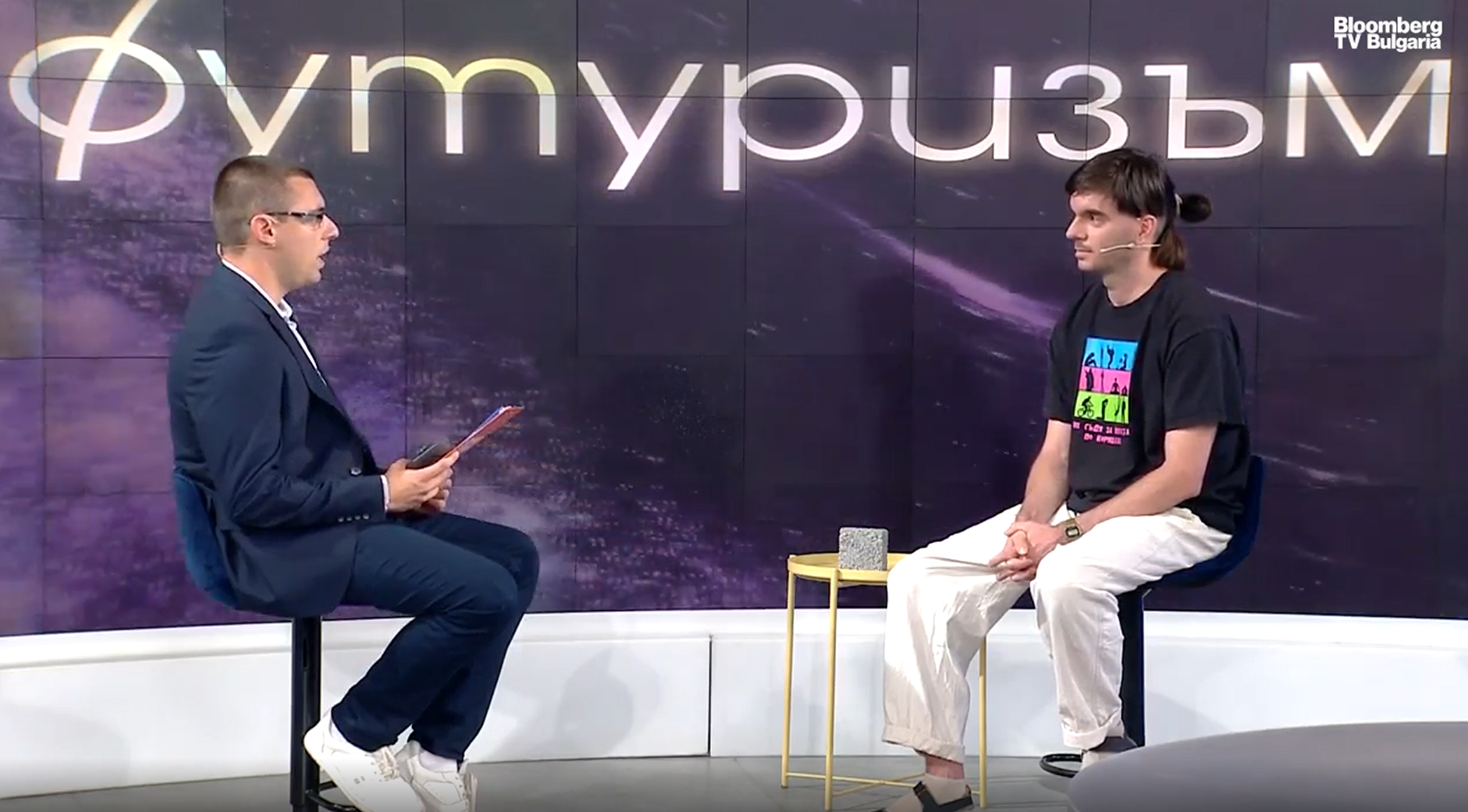
Concrete will remain the most widely used building material but its future lies in reducing its carbon footprint, utilising industrial waste and developing materials with new functional properties. This was commented by Assoc. Prof. Dr. Alexander Nikolov from the “Acad. Ivan Kostov” Institute of Mineralogy and Crystallography – BAS on the “Futurism” programme on Bloomberg TV Bulgaria, hosted by Anton Gruev.
During the discussion, Assoc. Prof. Nikolov outlined the current challenges facing cement and concrete production which contributes significantly to global carbon dioxide emissions. One approach to reducing these emissions is the partial replacement of Portland cement clinker with other mineral raw materials as well as the development of alternative binding materials.
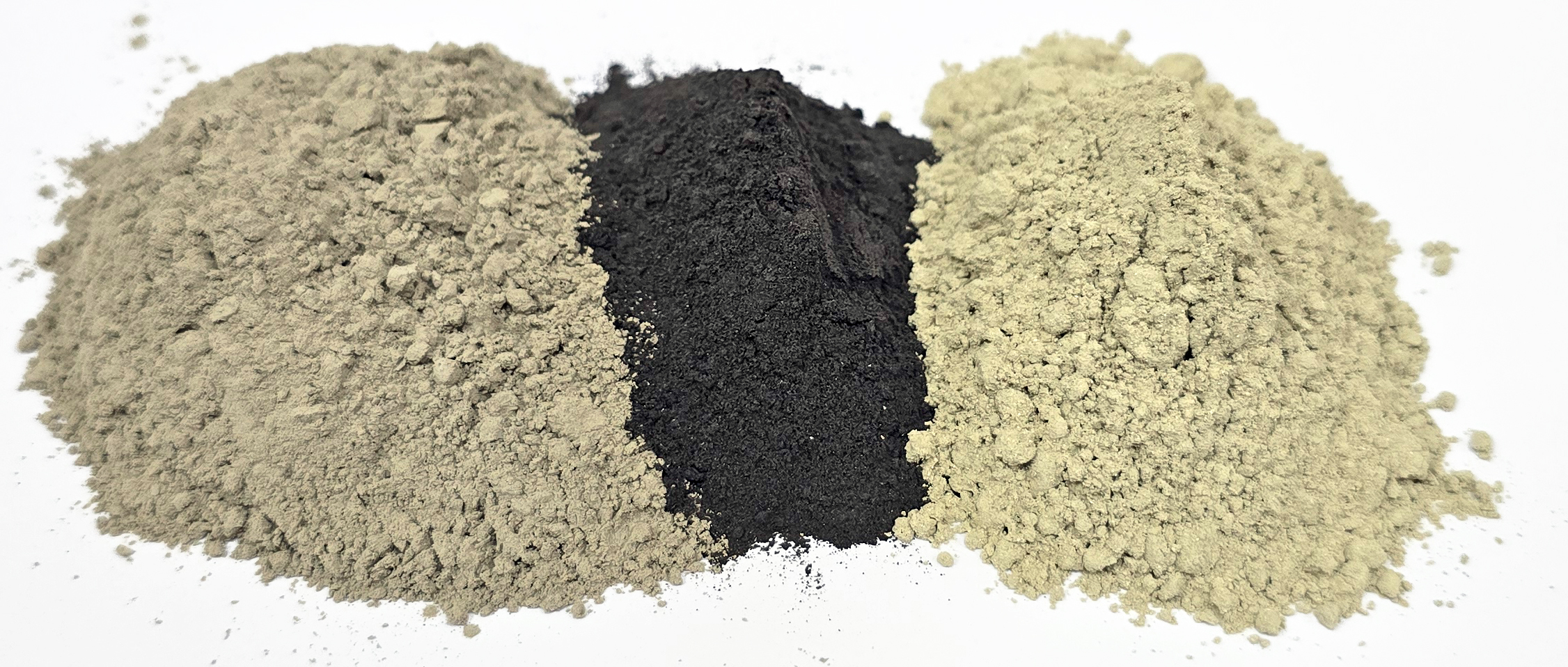
Assoc. Prof. Nikolov presented a concrete formulation created entirely from industrial waste materials – metallurgical slag, ash from thermal power stations and dust from cement production. In the right proportions, these raw materials form a binding system to which sand and aggregates from electric arc furnace slag can be added. Of particular interest is the material’s ability, throughout its life cycle, to capture carbon dioxide from the atmosphere and fix it within its structure.
Among the promising areas of research are bioreceptive concretes whose surfaces allow vegetation, including mosses, to grow. Applying them to building façades can help to mitigate the urban heat island effect, capture fine particulate matter, improve thermal and acoustic insulation properties, and create a more favourable urban environment.
Another alternative is geopolymer materials which can be produced using clays and various industrial residues, including ash and slag. These technologies enable a significant reduction in emissions compared with traditional Portland cement production and open up opportunities for converting waste products into raw materials for new construction materials.
According to Assoc. Prof. Nikolov, traditional Portland cement will retain its leading role for the foreseeable future but growing demands for decarbonisation and the costs associated with carbon emissions will create increasing opportunities for the introduction of alternative materials and technologies.
You can watch the full interview with Assoc. Prof. Dr. Alexander Nikolov on Bloomberg TV Bulgaria: https://www.bloombergtv.bg/a/88-futurizam/162555-badeshteto-na-betona-otritsatelni-emisii-i-novi-funktsii