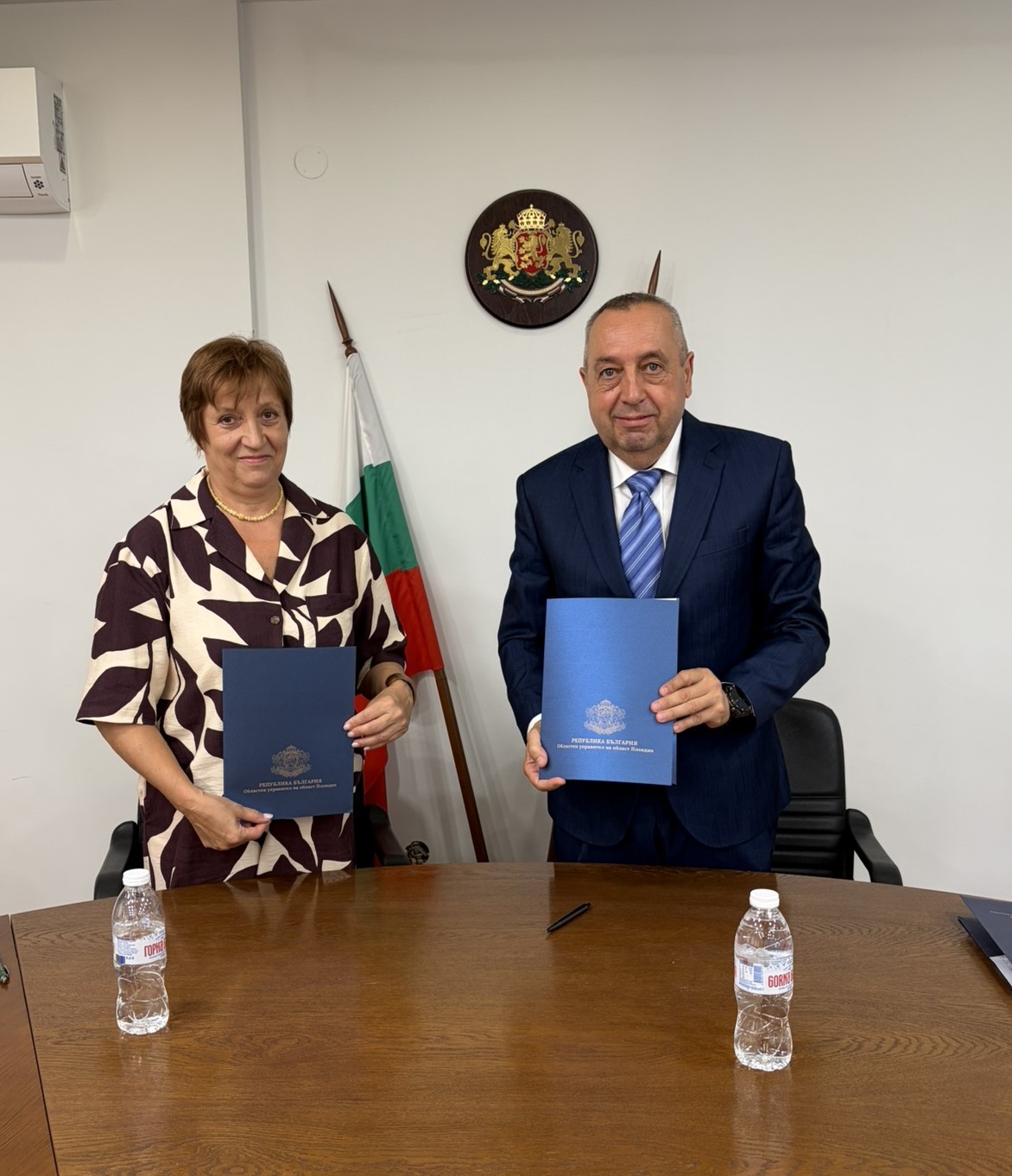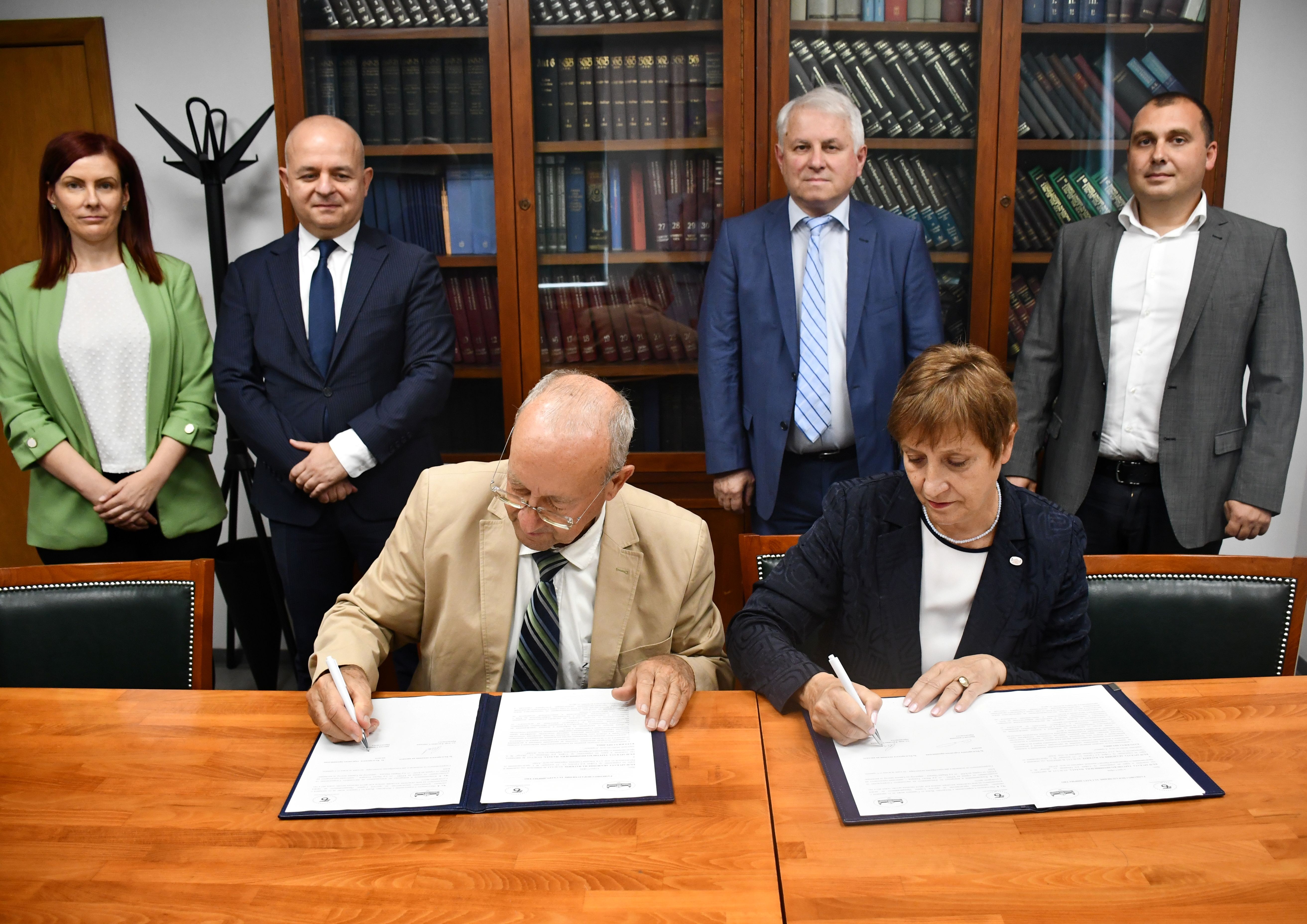

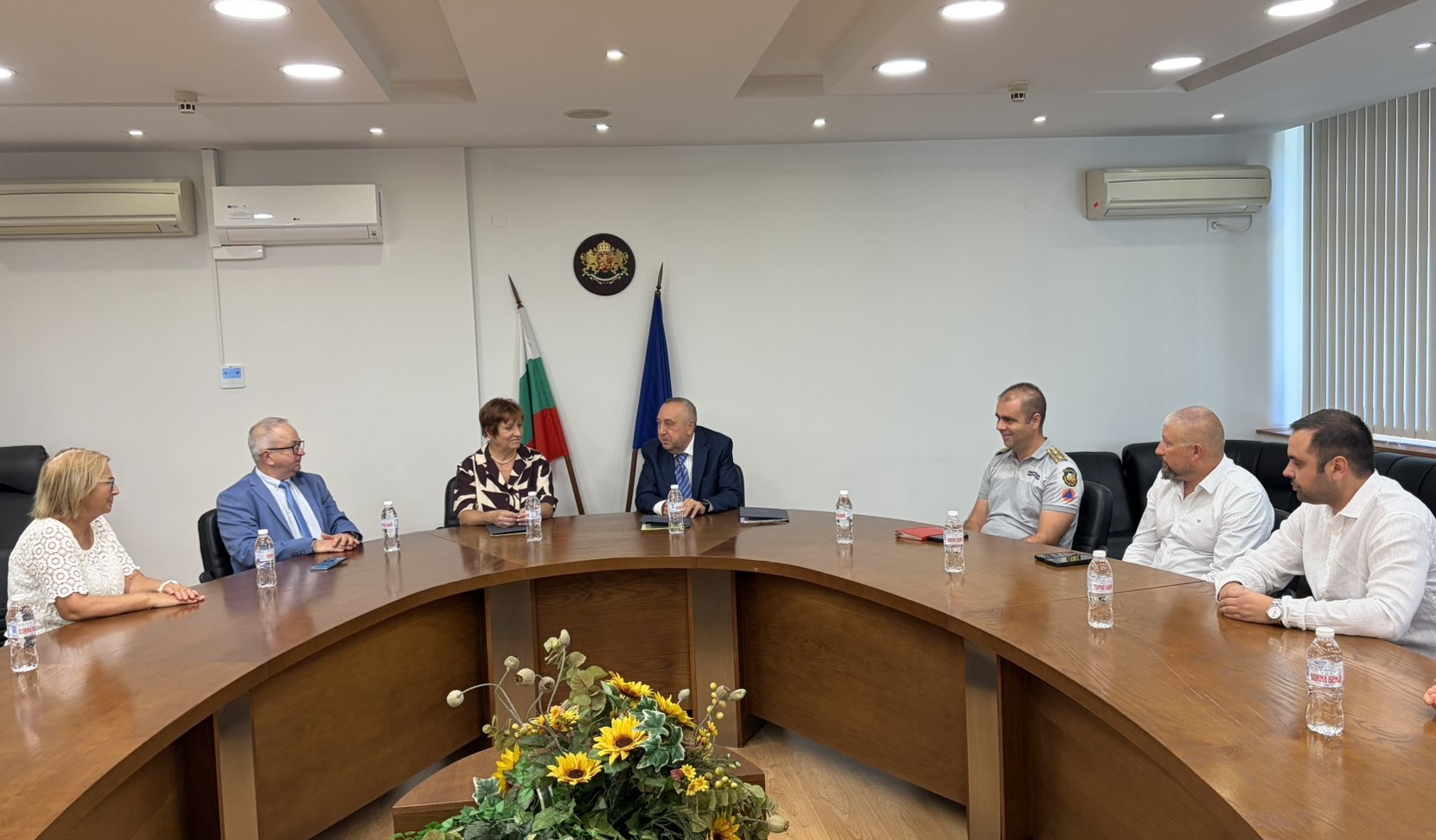
The President of BAS, Corresponding Member Evelina Slavcheva, and the Regional Governor of Plovdiv, Mr. Georgi Yanev, signed a Memorandum of Understanding between the Bulgarian Academy of Sciences and the Regional Administration – Plovdiv on August 4, 2026 in Plovdiv, Bulgaria.
The official signing ceremony was attended by Kamen Iliev – Director of the Center for National Security and Defence Research at BAS, Chief Inspector Vladislav Slavchov – Head of the “Preventive and Control Activity” Sector at the “Fire Safety and Civil Protection” Regional Directorate, Plovdiv, Vasil Uzunov – Director of the East Aegean Water Basin Directorate, Plovdiv, Eng. Kostadin Cholakov – Director of the Maritsa branch of “Irrigation Systems” EAD as well as Prof. Dr. Hristina Yancheva – Regional Governor of Plovdiv Region in the period 2024-2026, as a sign of continuity in support of the initiative.
“Today we are building on an idea that has the potential to change the way institutions manage risk and respond to disasters. Plovdiv has all the prerequisites to be a leading region in the application of space technologies for the benefit of society,” emphasized Georgi Yanev.
The President of BAS, Corr. Memb. Evelina Slavcheva, thanked for the invitation and emphasized that Plovdiv was one of the most important scientific centers in Bulgaria. “We are moving from the motto “BAS presents itself in the regions” to “BAS is present in the regions.” The initiative to establish a crisis management center is a natural continuation of this vision, she said.
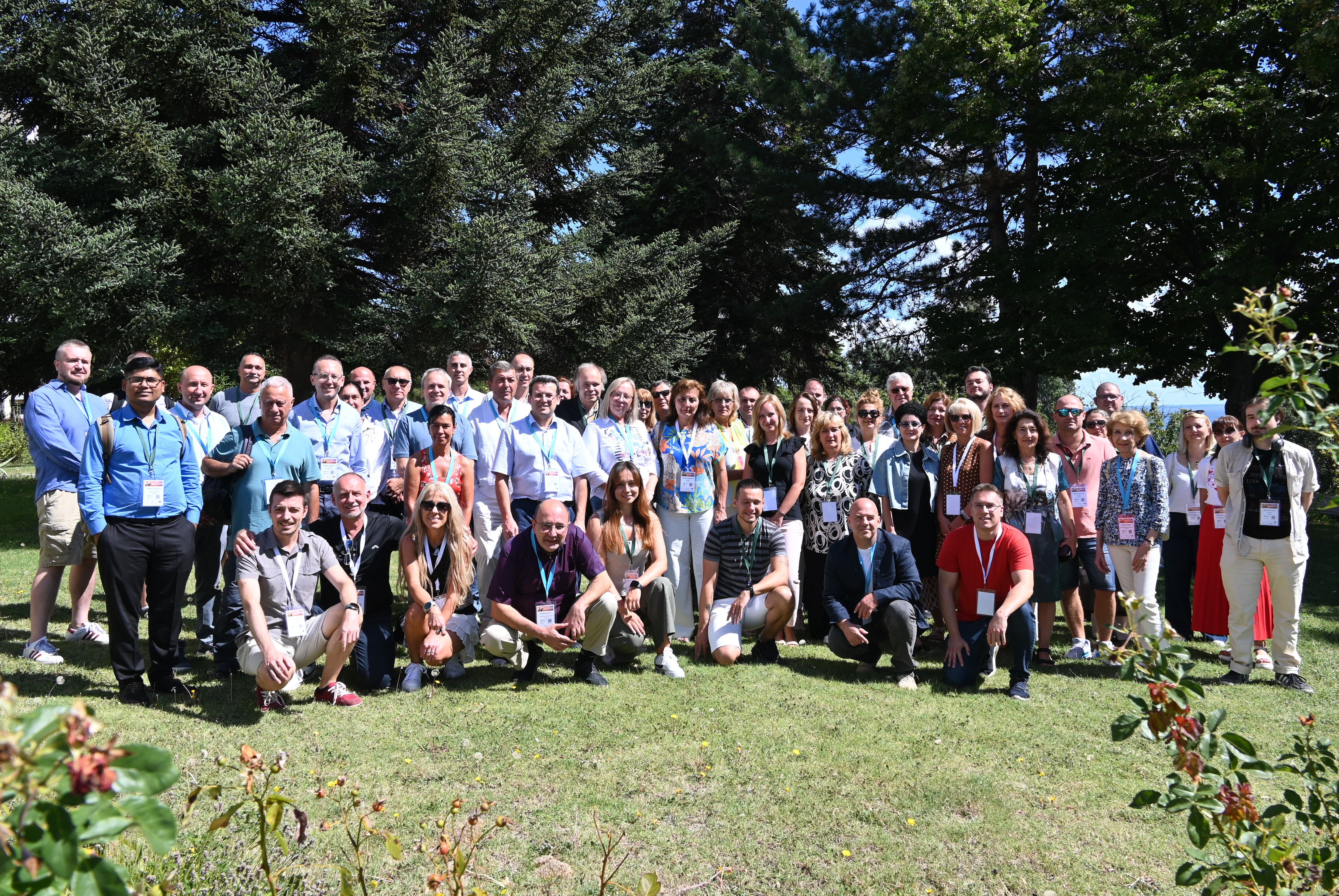
The memorandum is the result of the meetings and joint seminars held between representatives of the Regional Administration – Plovdiv and the Bulgarian Academy of Sciences over the past year. It aims to unite the scientific potential of the Academy and the administrative capacity of the regional authorities for sustainable development of the region. The two institutions will cooperate in the development of research, applied science and pilot projects in the field of regional management, related to risk analysis and assessment of the consequences of disasters and accidents related to climate change, the protection of critical infrastructure, environmental monitoring, energy efficiency, etc.
The partnership envisages combining the efforts of the two institutions for the development of an innovative and technological base in support of regional policies related to socio-economic development, digital transition and security.
Cooperation between the state administration and the scientific community is a key step towards building synergy between science and regional management. The pooling of knowledge, resources and expertise will create a sustainable basis for making informed decisions, addressing contemporary challenges and long-term prosperity of society.
As next steps in this direction, pilot tests are planned to be organised within the framework of the current fire-prone season which will demonstrate and verify the capabilities of space-based data from Earth observation in crisis management (high-precision infrared images). By integrating these data with additional ground-based information, dedicated applications will be developed that can be used in the development of a demonstration model (prototype) of a regional center in support of crisis and disaster risk management