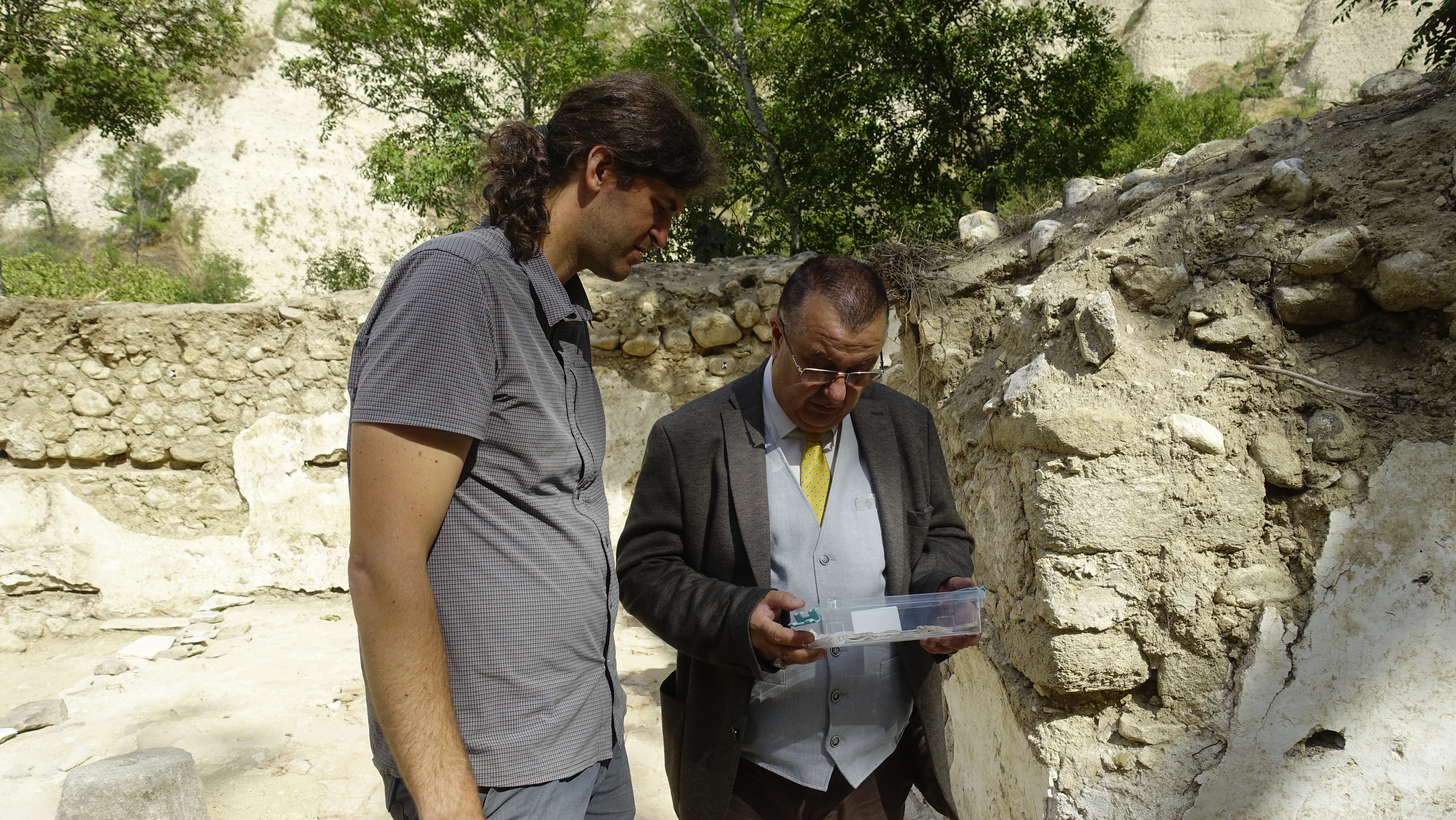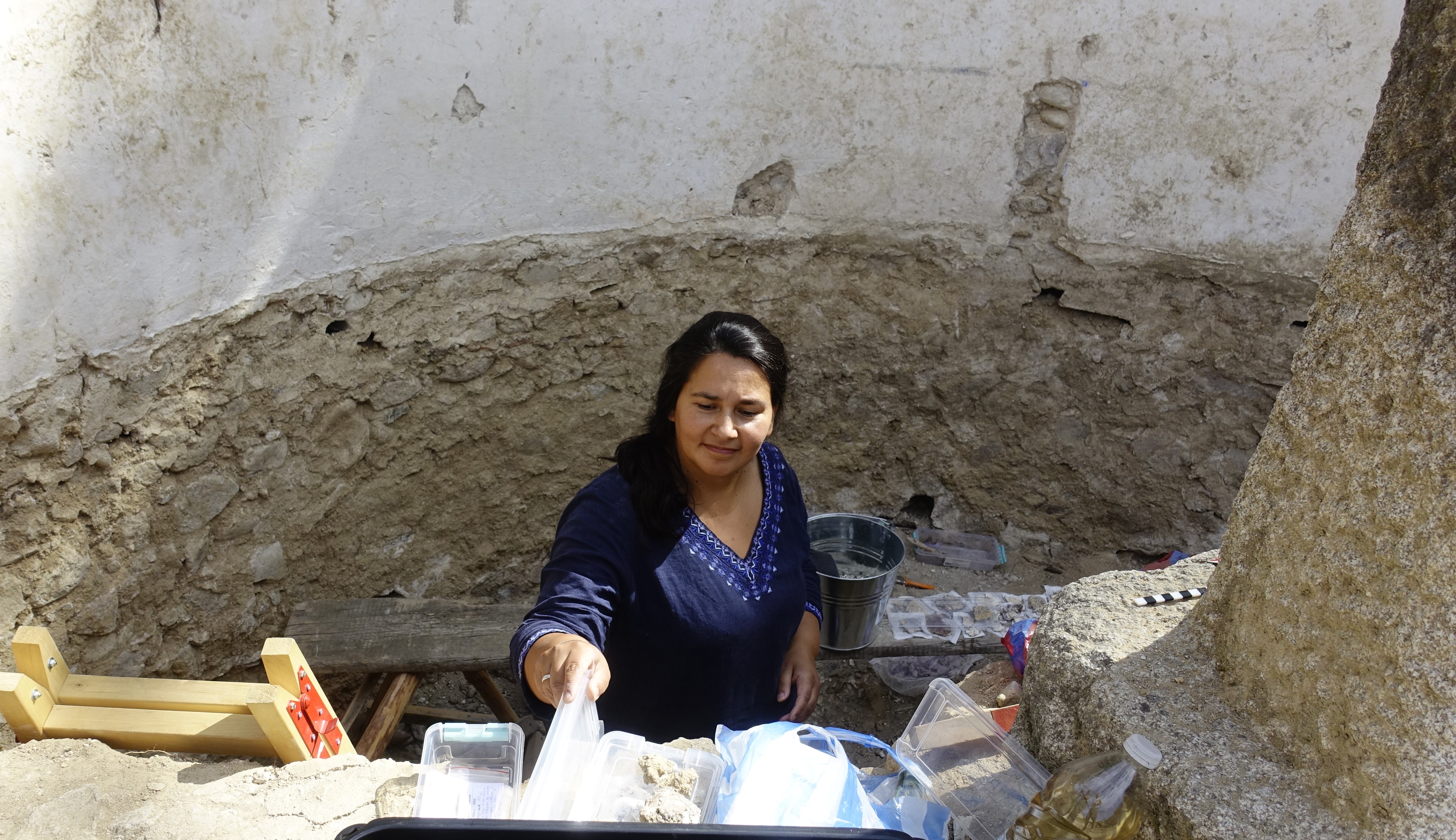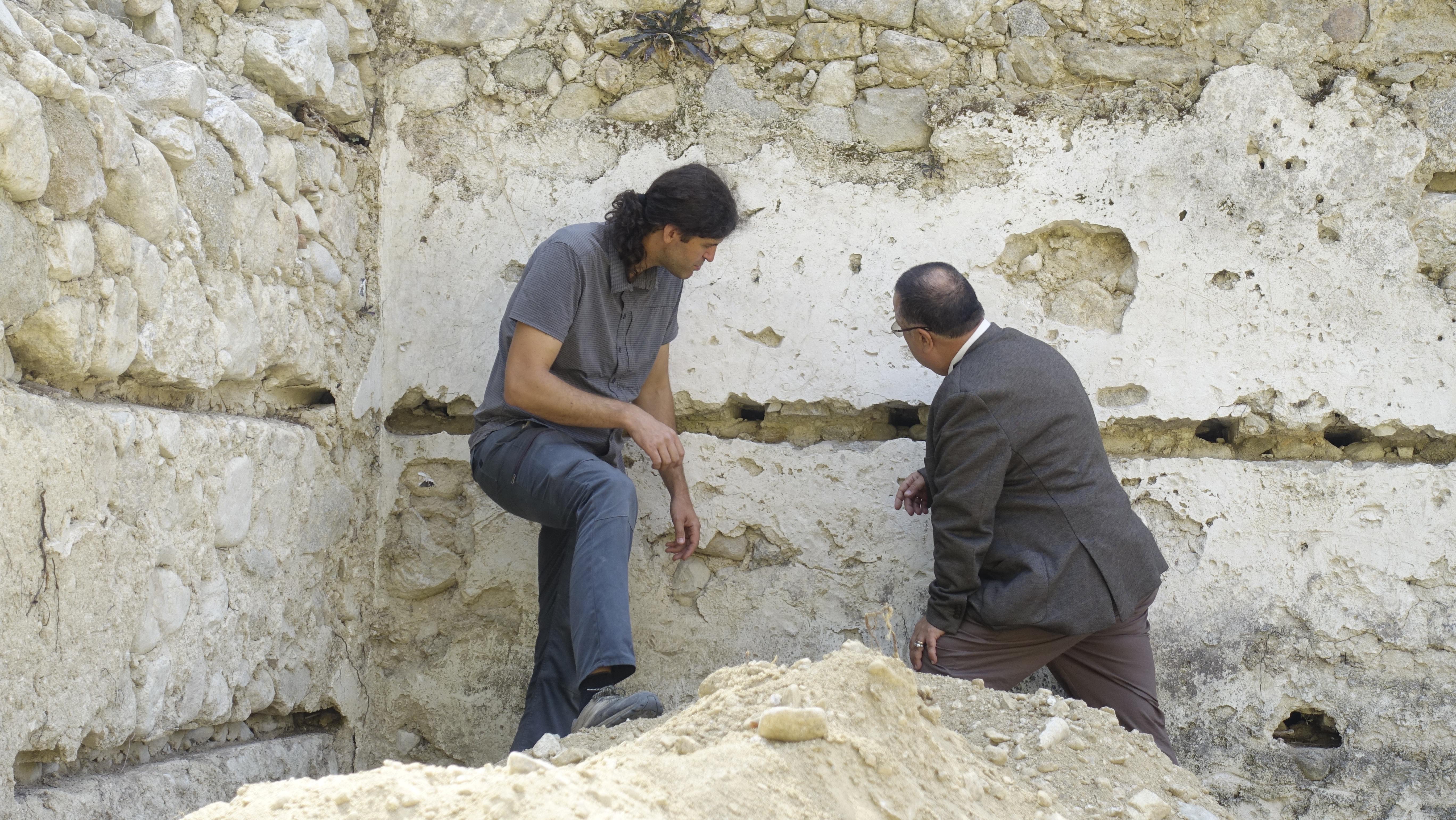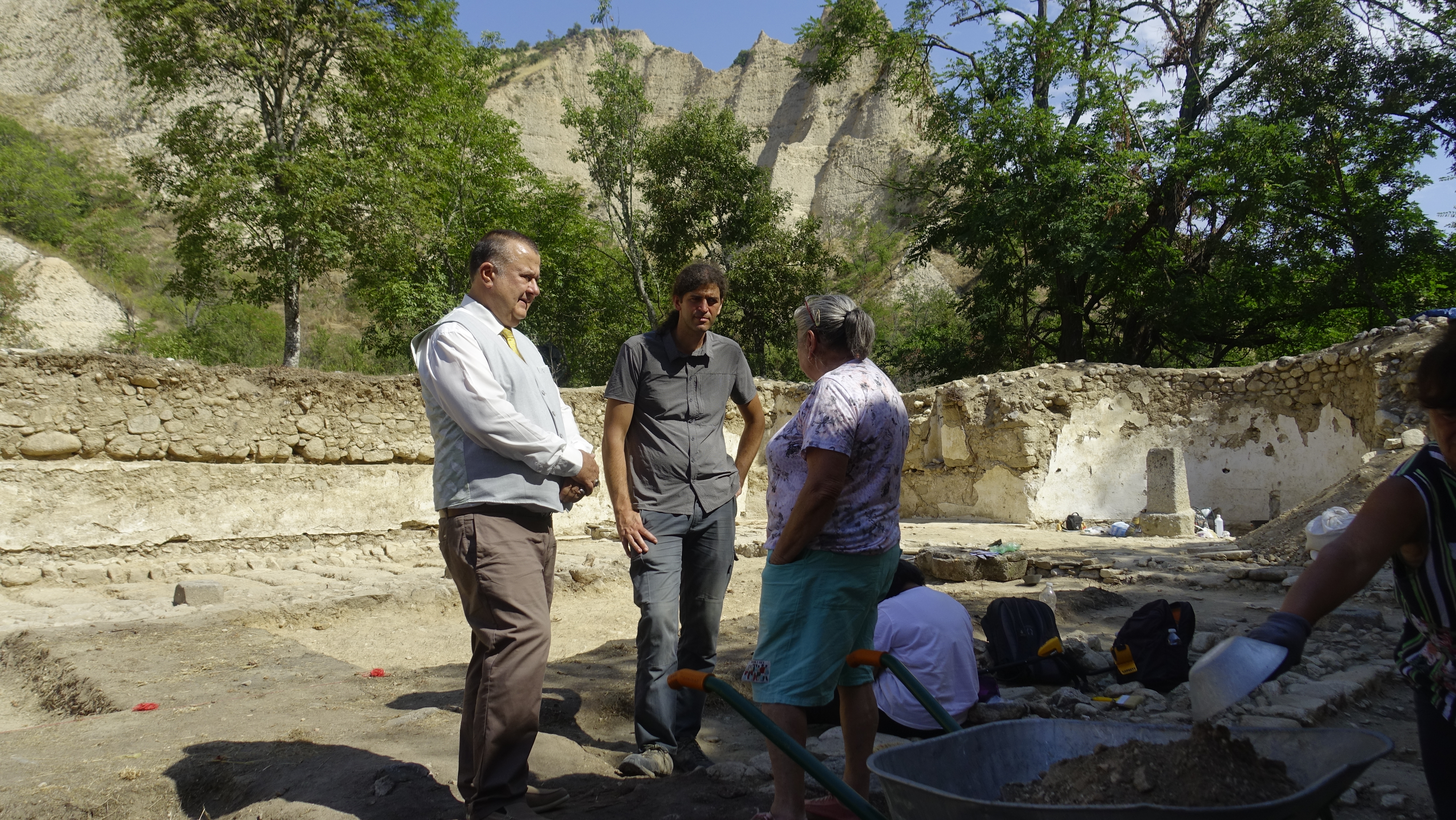

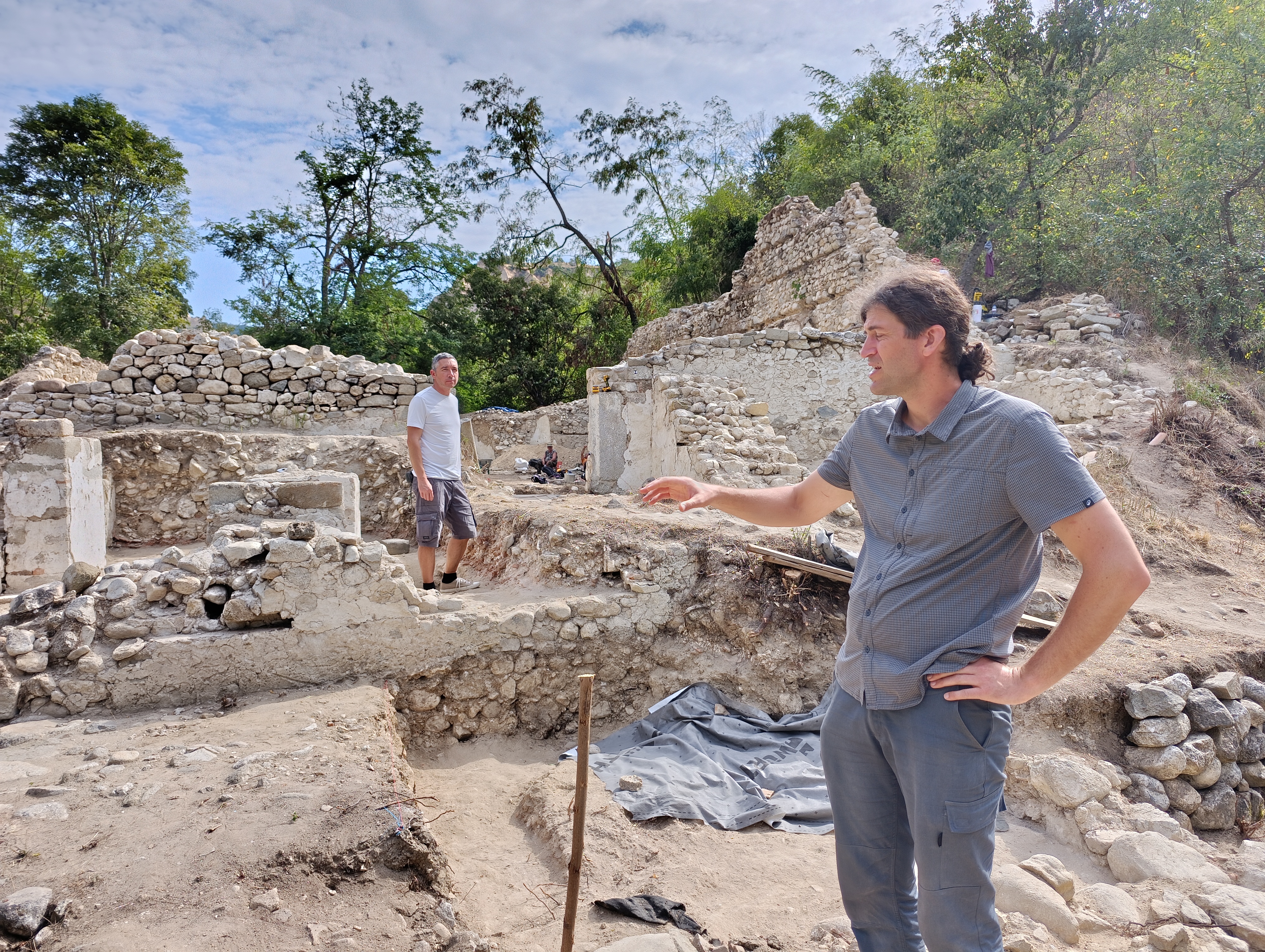
On 12 September 2026, the Vice-President of BAS Prof. Emmanuel Moutafov visited the archaeological excavations in the “Life-giving Spring of the Mother of God” church in the historic Armenia quarter of Melnik, which were taking place for the fourth consecutive season under the direction of Sen. Asst. Prof. Dr. Metodi Zlatkov from NAIM and Dr. Maria Pashova (RHM – Blagoevgrad).
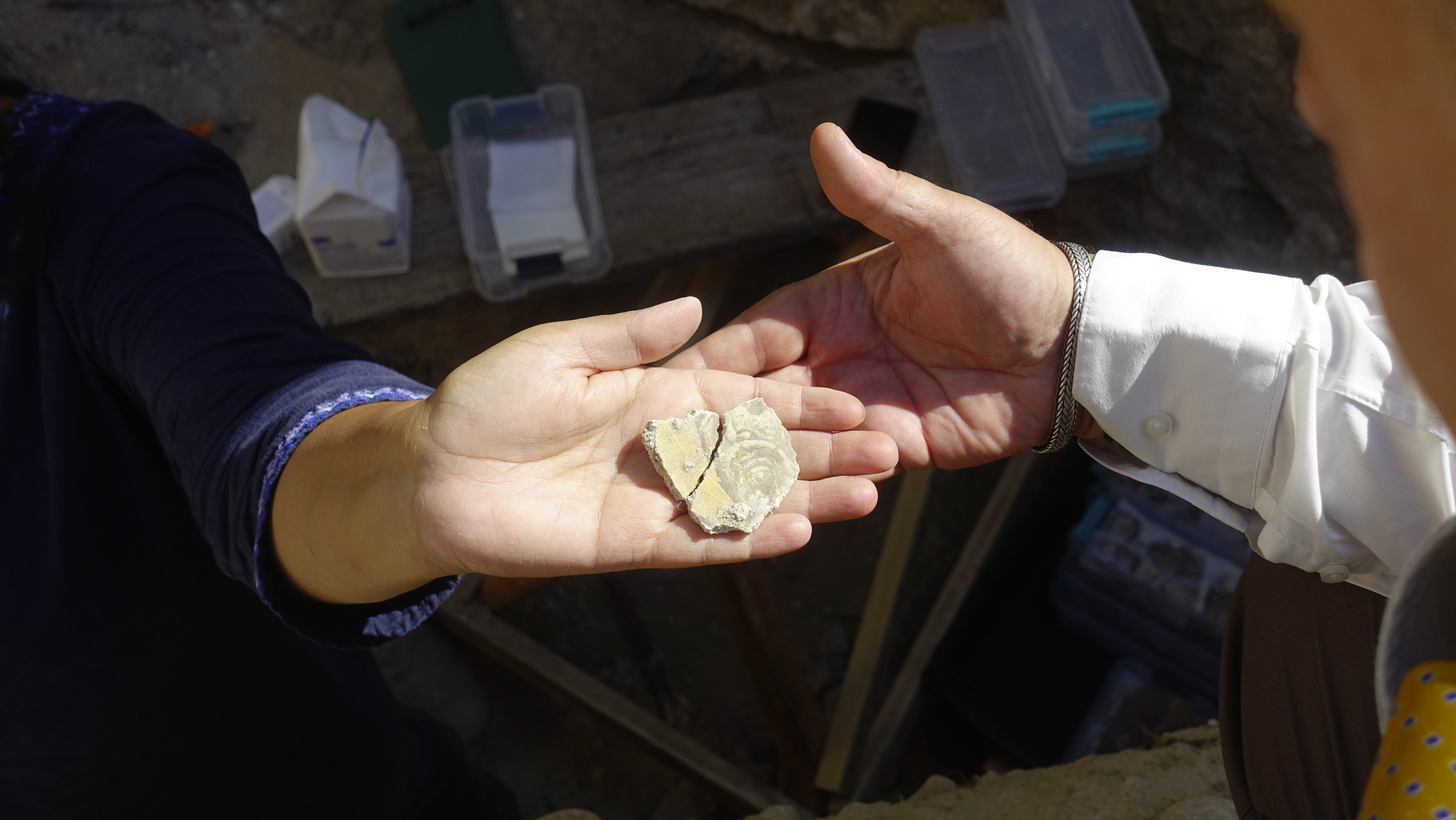
As we have already informed you, the Church of the Life-giving Spring of the Mother of God is situated in the Rozhen Valley, or at the start of the footpath from Melnik to Rozhen Monastery. Its development can be divided into two main construction phases: the first dating from the late 13th to the first half of the 14th century, and the second from the mid-19th century. In 2026, the team’s efforts are focused on completing the study of the church’s later phase and continuing work on the earlier one. During Prof. Mоutafov’s visit, the restorer Reneta Karamanova-Zlatkova (NAIM – BAS) showed a recently discovered fragment of a mural depicting the face of a saint which most likely formеd part of the decoration of the old 14th-century church. The face is rendered with striking elegance and is notable for its small size, more characteristic of manuscript decoration than of wall painting. It is interesting to note that the fragments of old murals were “ritually buried” in a precisely defined part of the old church and within the altar area of the 19th-century church. The working hypothesis of the researchers, including Assoc. Prof. Dr. Ivan Vanev from the Institute of Art Studies – BAS, is that these fragments were used to consecrate the new space and that their layering was intended to preserve them, rather than to destroy them. The archaeologists also revealed graffiti on the lime plaster of the new church; the prospects for a forthcoming publication were discussed as well as the revival of the “Melnik” series of academic publications.
Research into the Church of the “Holy Mother of God” provides new insights into the history of Melnik and opens up opportunities for the site’s future exhibition and its inclusion in a tourist itinerary; however, this requires sustainable funding. This once again raises the question of the Ministry of Culture funding excavations with a longer-term perspective, as well as the controversial designation of “priority” sites at the expense of others which, whilst not on the same scale, are nonetheless significant in terms of content and historical value. Prof. Moutafov also familiarised himself with the issues relating to the site’s ownership, as well as the need for a new cadastral plan for Melnik which would include cultural monuments located outside the boundaries of the modern settlement. He also assured them of the support of the Bulgarian Academy of Sciences’ leadership for systematic and in-depth archaeological research which included the medieval period. And although research into Melnik has not been a priority in recent decades, the need to continue the authentic reconstruction of the town’s past was highlighted, 55 years after the start of its systematic study. In conclusion, the team and the Vice-President of BAS agreed that an important and relatively well-preserved monument could become yet another highlight in the presentation of the rich cultural heritage of medieval Bulgaria which possessed both the means and the taste to invite the finest representatives of the Palaiologos school of painting to adorn its churches.