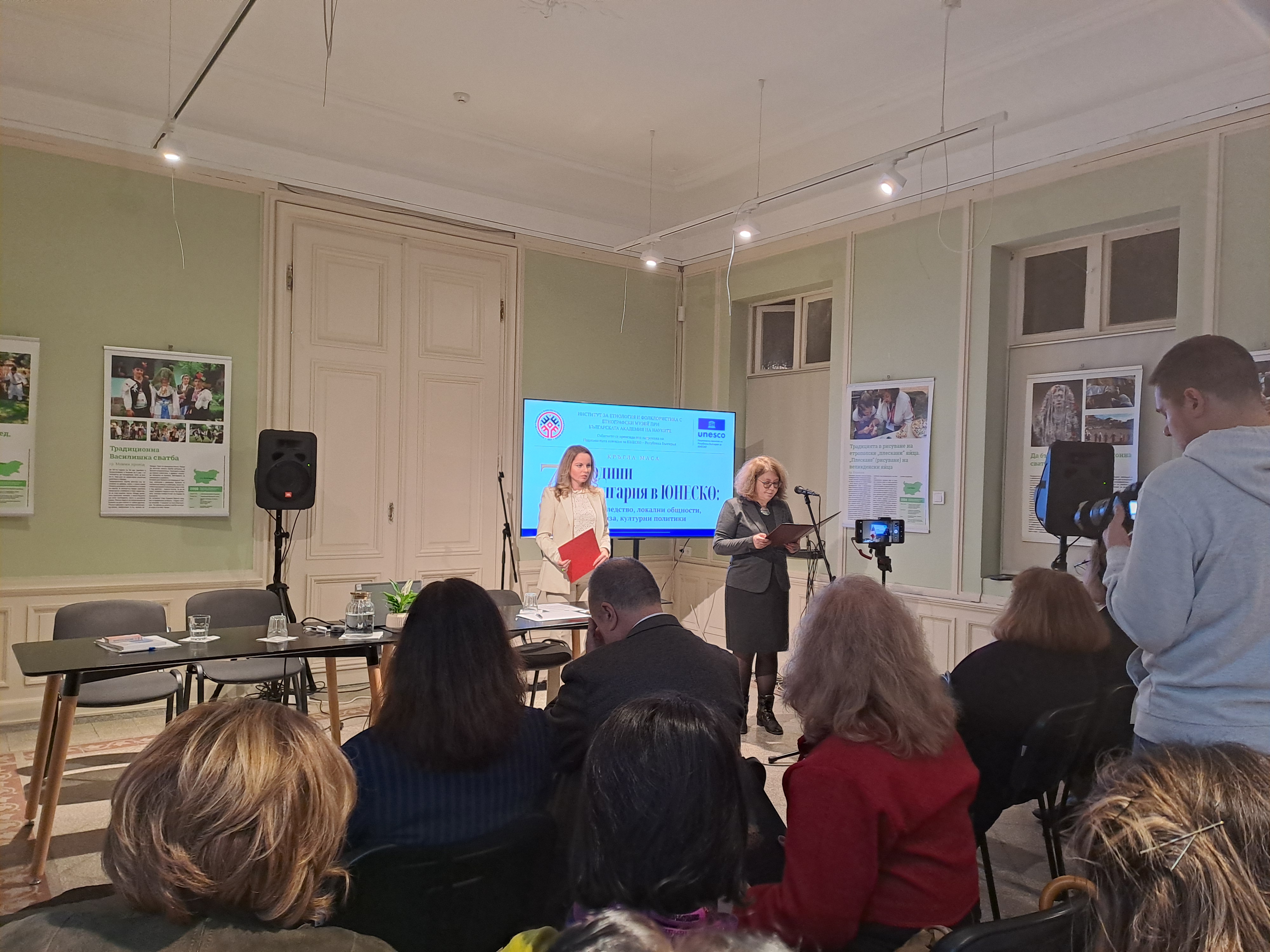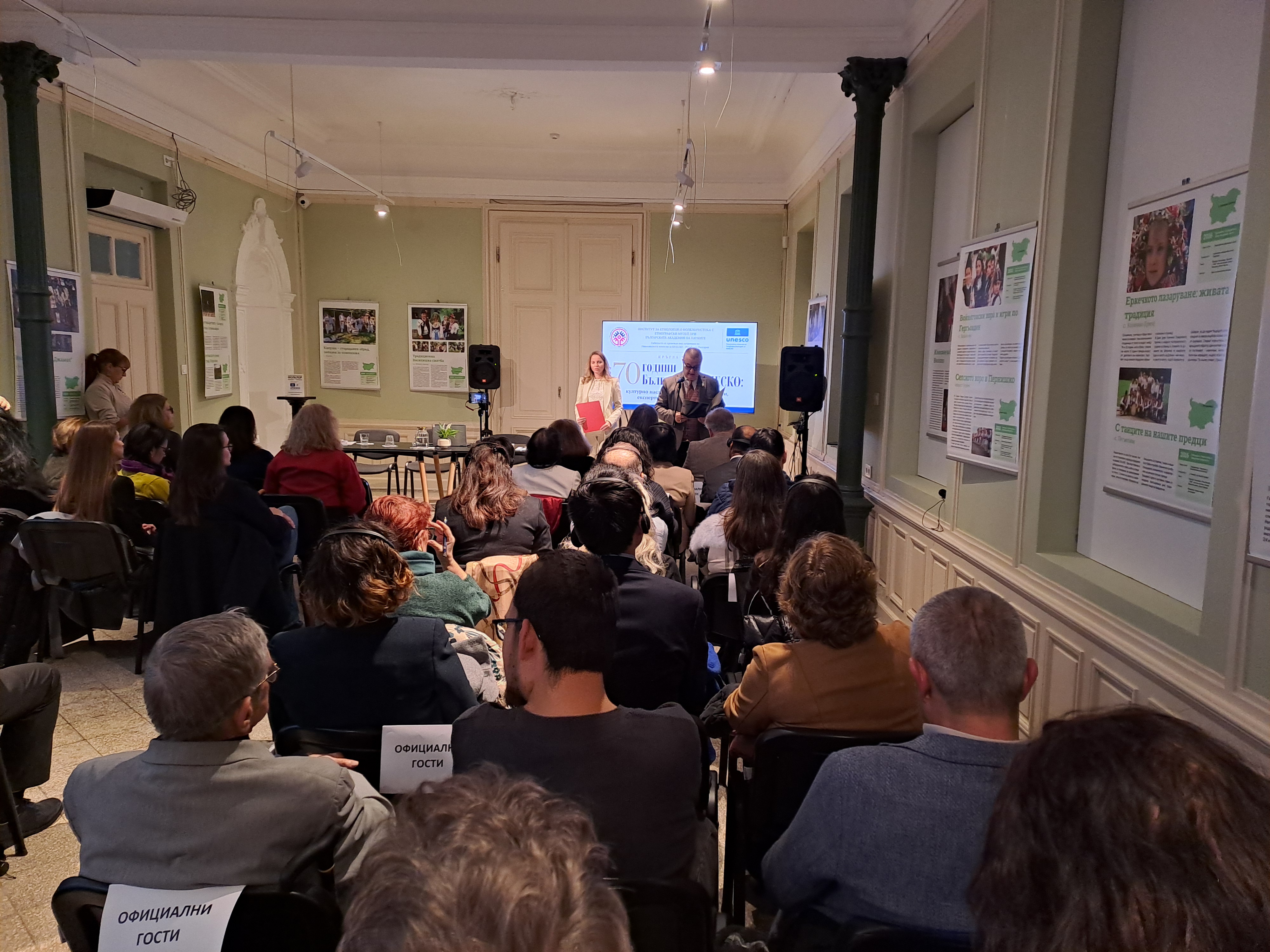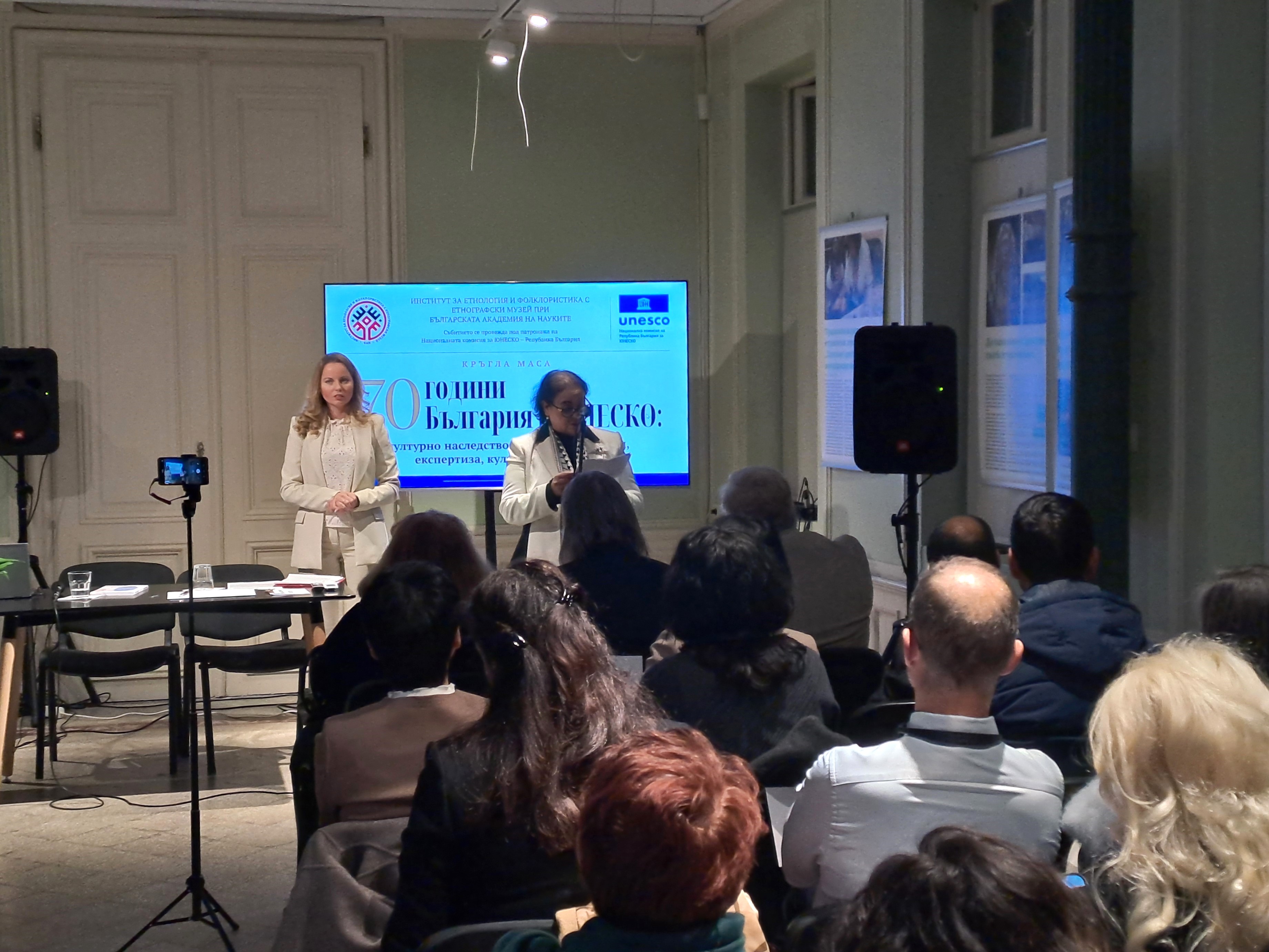

A forum marking the 70th anniversary of Bulgaria’s membership of UNESCO was held on 16 November at the Institute of Ethnology and Folklore Studies with the Ethnographic Museum – BAS (IEFSEM-BAS). The event, organised by IEFSEM, took place under the patronage of the Bulgarian National Commission for UNESCO.
The Vice-President of BAS Prof. Emmanuel Moutafov delivered a welcome address on behalf of the Academy’s leadership. This significant anniversary also provides an opportunity to take a clear look at the role of science in safeguarding and making sense of our cultural heritage, he noted in his speech. Prof. Moutafov stated that throughout those seven decades, BAS had been not merely a witness but an active participant and a pillar of scientific research in the processes of studying, documenting and promoting Bulgaria’s tangible and intangible heritage on a global scale. The Vice-President of BAS emphasised that the forum’s theme captured the most important contemporary principle in that field and stressed that sustainable policies were impossible without sound scientific expertise but that science found its true meaning, he clarified, only when it worked hand in hand with living communities – the true bearers of tradition. The Vice-President congratulated the researchers from IEFSEM on the initiative and their many years of dedicated work addressing them with the words: “Your expertise forms the basis of a number of national strategies and international nominations of Bulgaria.”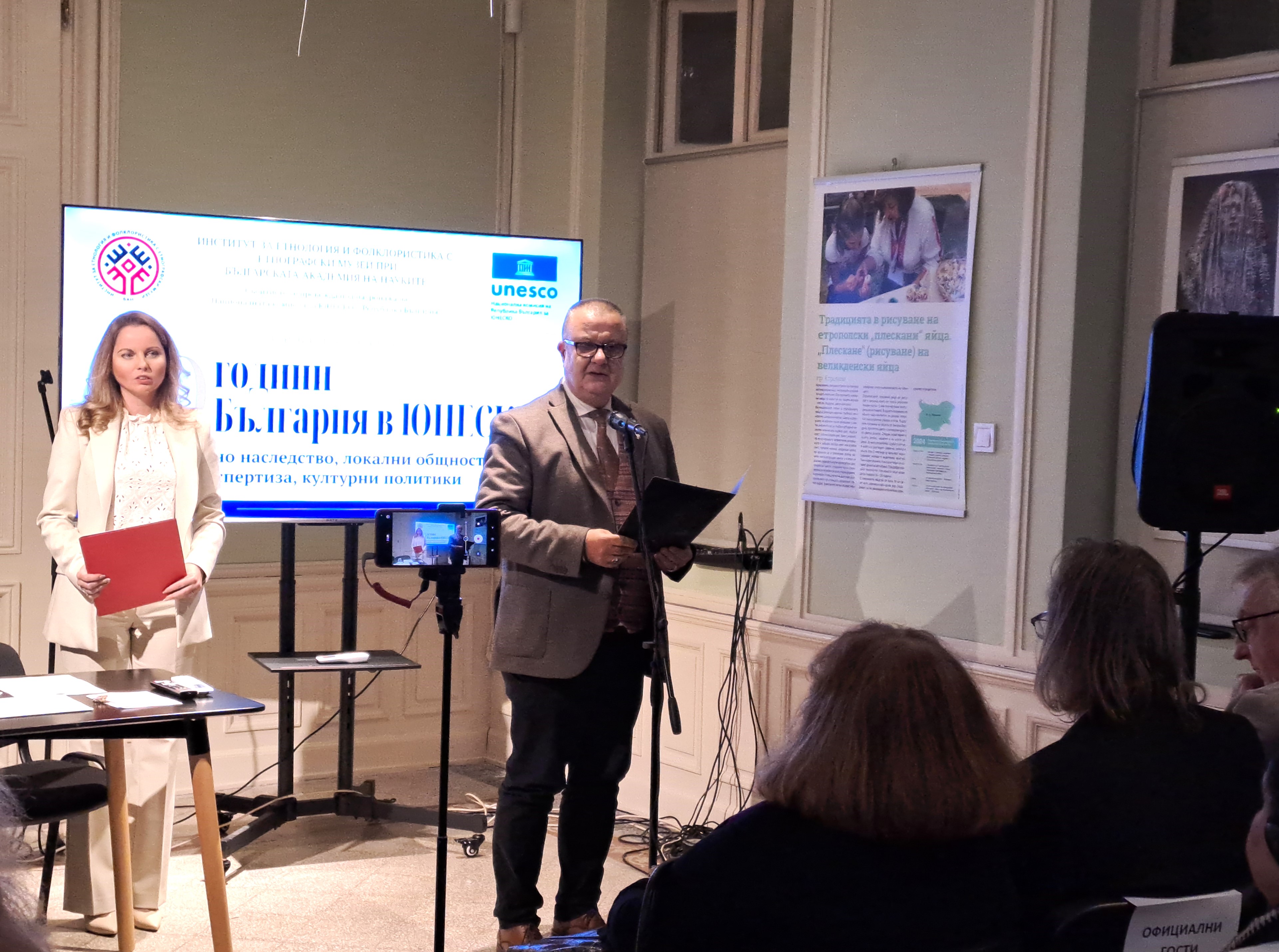
On 17 May 1956, Bulgaria became part of an international community united by the understanding that education, science and culture formed the foundation of peace, mutual understanding and the sustainable development of humanity, said Assoc. Prof. Mila Maeva, Director of IEFSEM, at the opening of the forum. She emphasised that, 70 years on, this anniversary provided an opportunity not only to take stock of what had been achieved but also to rethink our responsibilities.
Members of Parliament, representatives of the diplomatic corps, ministries, state and local government institutions and the academic community attended the anniversary forum. Greetings were also delivered by MP Dr. Nihal Yuzergan, Deputy Minister of Tourism Prof. Mariela Modeva and the Ambassador of the Kingdom of Morocco, Zakia El Midaoui, the doyen of the diplomatic corps.
During the discussion, leading scholars and experts from BAS and Sofia University “St. Kliment Ohridski” discussed best practices and challenges in the preserving of cultural heritage as well as its place in cultural policies and public life. Corresponding Member Mila Santova presented UNESCO’s vision for the safeguarding of cultural heritage in accordance with the conventions of 1972, 2003 and 2005. The work of the Regional Centre for the Safeguarding of the Intangible Cultural Heritage in South-Eastern Europe under the auspices of UNESCO was also discussed. At the opening, Prof. Emmanuel Moutafov stated that BAS had no communication with the centre despite being one of its founding institutions. Corr. Memb. Mila Santova commented on management issues and proposed more active participation of the three founding institutions – the BAS, the Ministry of Culture and the Ministry of Foreign Affairs.
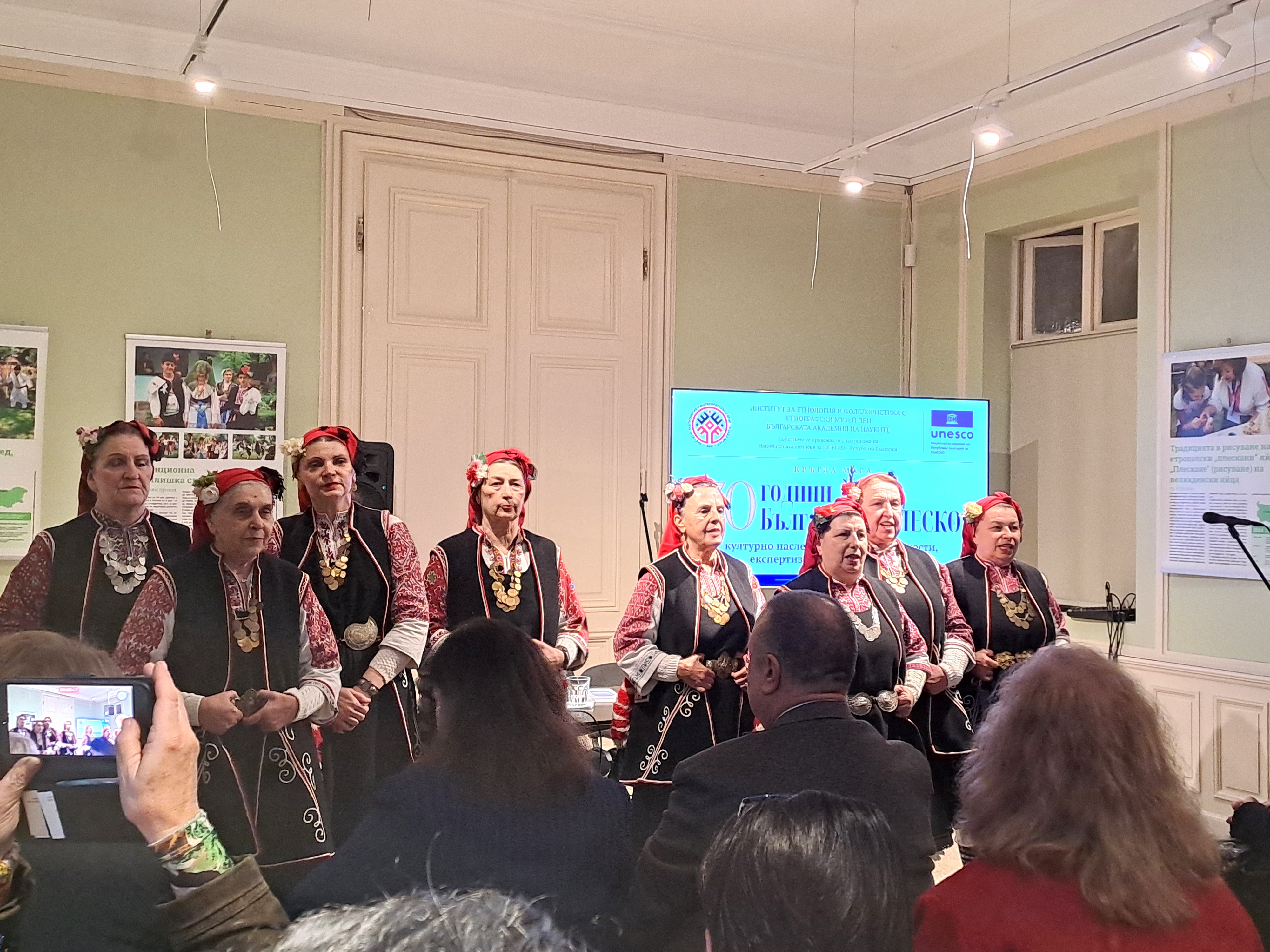
The official opening at IEFSEM began with a performance by the “Bistritsa Babi” group which is inscribed on UNESCO’s Representative List of the Intangible Cultural Heritage of Humanity. The exhibition “Living Human Treasures – Bulgaria” was opened during the forum. The exhibition showcases the elements of intangible cultural heritage inscribed on the National Representative List.
On 16 November 1945, the UNESCO Constitution was signed in London. The aim of the forum “70 Years of Bulgaria in UNESCO: Cultural Heritage, Local Communities, Expertise, Cultural Policies” is to initiate a multifaceted and in-depth discussion on the state of Bulgarian sites, artefacts and elements inscribed or recognised within the framework of UNESCO as well as to foster an open dialogue on the participation of all stakeholders in identifying the issues, best practices and challenges involved in the preservation of cultural heritage.