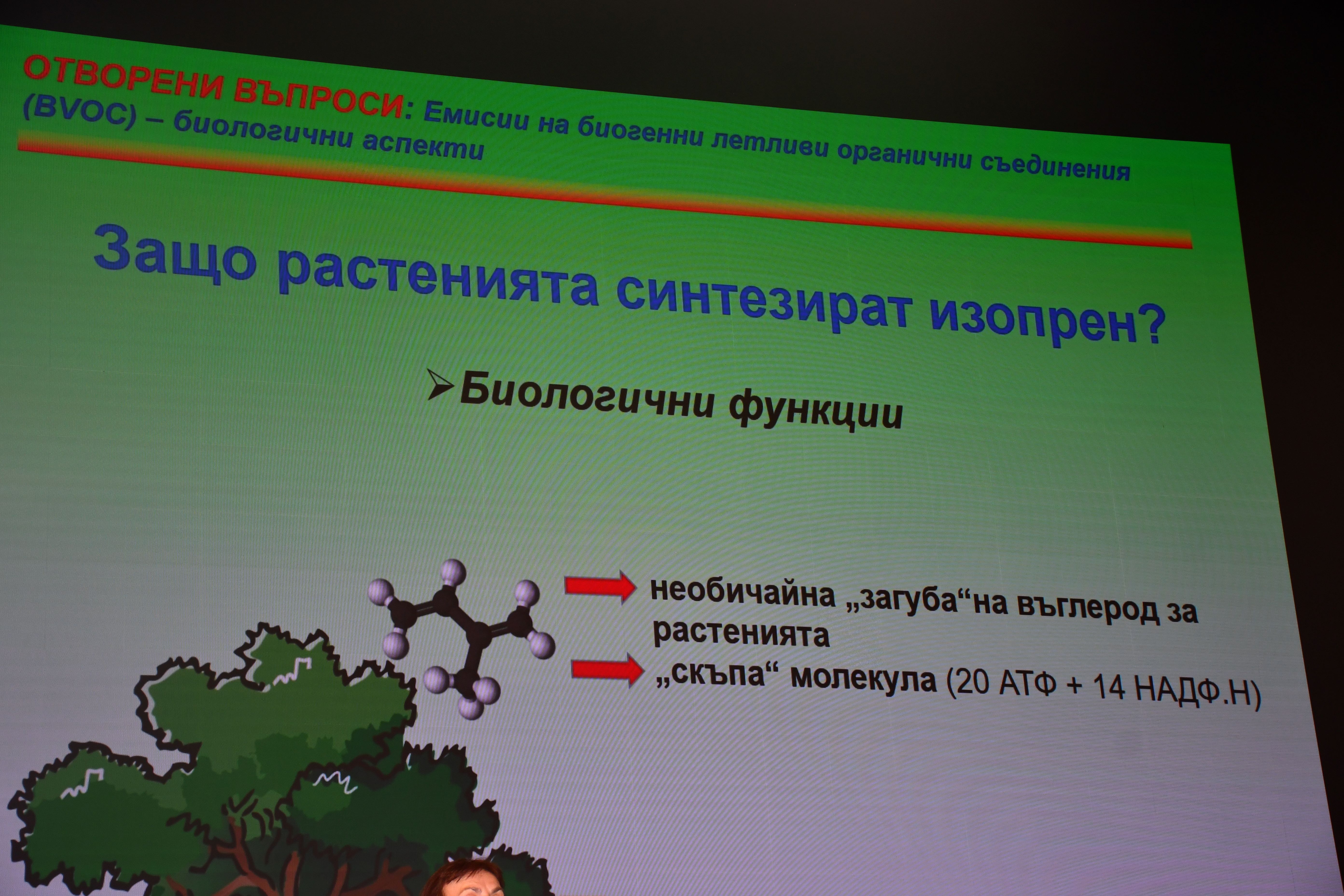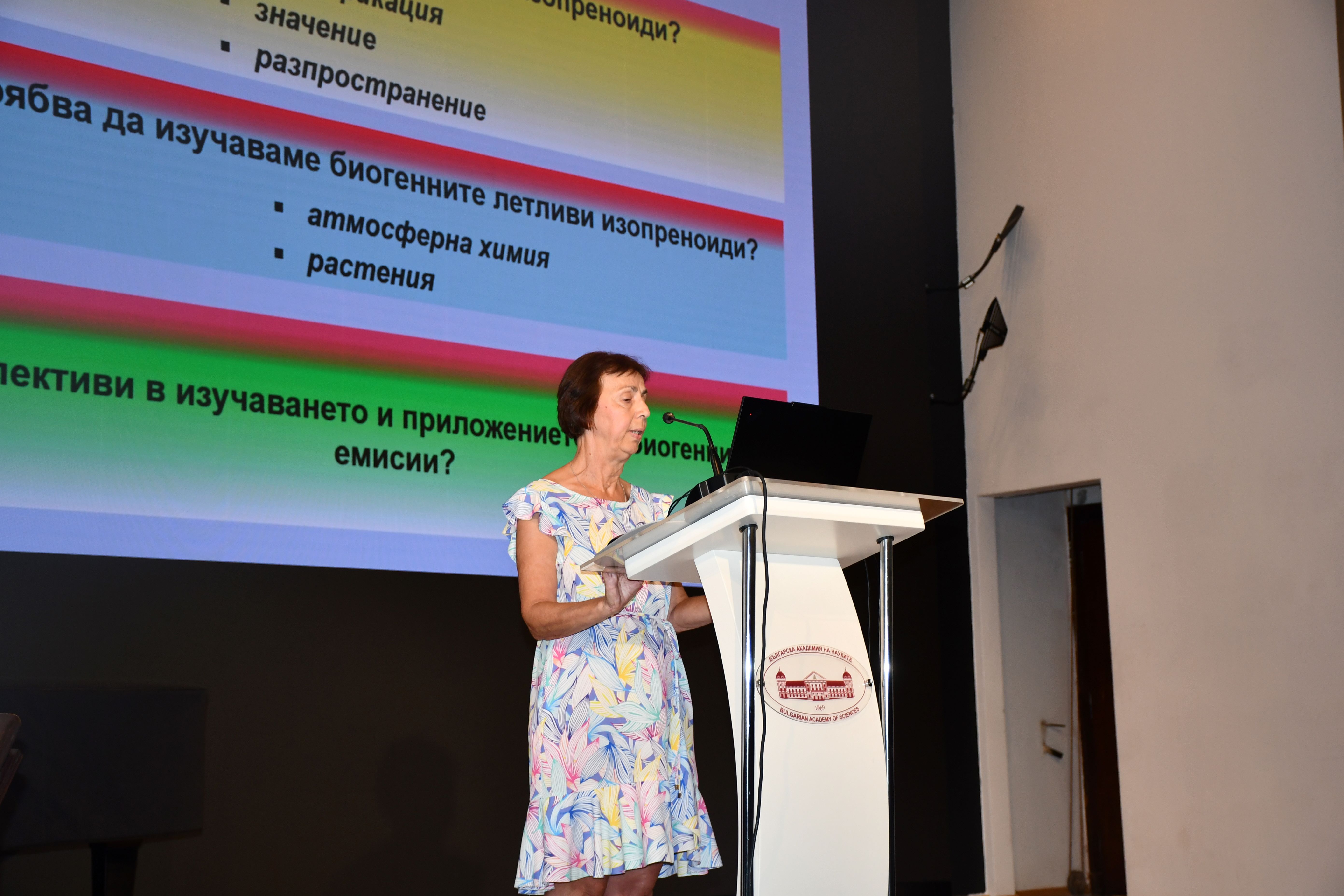

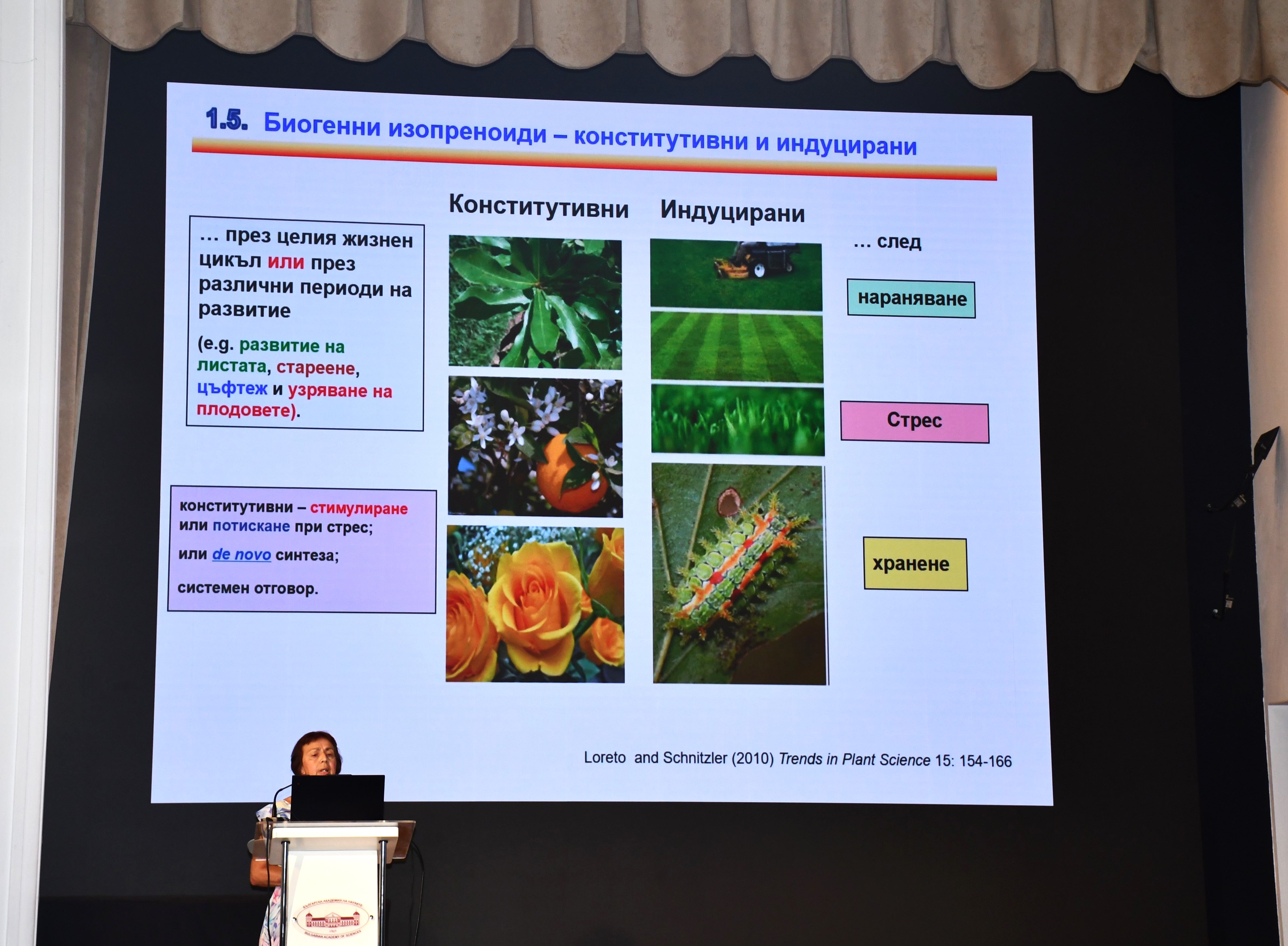
A lecture titled “Biogenic Volatile Isoprenoids – Climate Change and Plant Protection. Interrelationships and Consequences” was delivered by Corr. Memb. Violeta Velikova from the Institute of Plant Physiology and Genetics of BAS. The lecture took place as part of the academic seminar “Current Issues in Science” on June 18 in the “Prof. Marin Drinov” Hall at BAS.
What biogenic volatile isoprenoids are, why we should be interested in them, and how our knowledge of them could be used for the benefit of society were just some of the questions addressed in the lecture.
On a global scale, plants release enormous amounts of volatile organic compounds equivalent to about 1,300 Tg of carbon per year, and these emissions are about 10 times greater than total anthropogenic emissions of organic compounds. Isoprene is the most widespread biogenic volatile hydrocarbon. Calculations show that global isoprene emissions account for approximately 44–60% of total emissions of biogenic volatile organic compounds. Plants do not possess structures in which to store isoprene, and once formed, it is released into the environment. Due to its high reactivity, isoprene plays an important role in atmospheric chemistry and air quality.
Interest in studying volatile isoprenoids is also linked to the fact that they serve as a means of communication between plants and their environment as well as to their presumed protective role in plants experiencing various stressors.
Corr. Memb. Velikova is the head of the “Photosynthesis – Activity and Regulation” laboratory. Corr. Memb. Velikova’s main research interests focus on studying the physiological role of biogenic volatile organic compounds and their relationship to the integrated photosynthetic process as well as the application of modern technological practices in plant biology to enhance photosynthetic efficiency and the targeted synthesis of natural secondary metabolites for the development of highly productive plants that are resistant to adverse environmental factors. Her publication record includes 128 articles in prestigious scientific journals, with a total impact factor exceeding 330. Her works have been cited over 10,000 times, including more than 6,500 times in the last five years, with an h-index of 35 (WoS). Since 2019, she has been ranked in the top 2% of Stanford University’s list for contributions to the advancement of global science.