Scientific achievements of IBIR in the field of single-cell transcriptomics

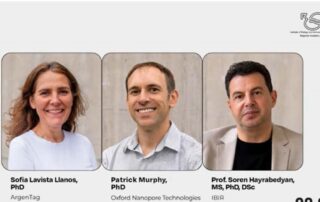
Scientists from the “Academician Kiril Bratanov” Institute of Biology and Immunology of Reproduction (IBIR-BAS) presented their latest findings in single-cell biology during the “Beyond Gene Expression: Single–Cell Isoform–Resolved Biology” international webinar organised jointly by the biotechnology companies ArgenTag and Oxford Nanopore Technologies. As a guest speaker, the institute’s director Corresponding Member Prof. Dr Soren Hayrabedyan, presented practical experience in the application of long-read sequencing of single cells. The data reveal previously unexplored mechanisms through which tumour cells transition to a more aggressive phenotype and evade the immune response. The results and bioinformatic analysis, developed by the team of Prof. Krassimira Todorova, DSc, show that over half of the key genes undergo a switch in their transcript forms (isoforms) without any change in the overall level [...]

Bulgarian scientists uncover the key to a rare genetic disorder

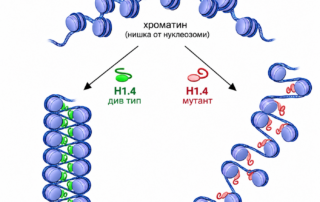
Rare diseases affect 1 in 2,000 people which means over 350,000–400,000 Bulgarians and at least 30 million Europeans. To date, 7,000–8,000 rare diseases have been identified, the majority of which are of unknown origin, and over 90 per cent of which have no treatment. Elucidating the molecular mechanisms underlying these diseases is of paramount importance for medical science and human health. A diagram comparing the effect of normal histone H1.4 and its mutated form on an array of nucleosomes. Every human cell contains 30 million nucleosomes (the basic building blocks of chromatin), and each of these consists of four core proteins around which the DNA is wound. The DNA is represented by blue lines wound around the four proteins (grey circles). The individual [...]

The Institute of Microbiology marks International Microorganism Day

International Microorganism Day – 17 September – was marked in the conference hall of the “Stephan Angeloff” Institute of Microbiology (IMicB) at the Bulgarian Academy of Sciences (BAS). This year’s event took place as part of a formal session of the National Seminar on General Virology, Infections and Antimicrobials at the Union of Scientists in Bulgaria and the Seminar of national importance on Infectious Microbiology at IMicB– BAS. The celebration of this day began in 2017 at the suggestion of the Portuguese Society of Microbiology with the support of the Federation of European Microbiological Societies (FEMS). The aim of the initiative is to promote the history and contribution of microbiology to modern medicine, biotechnology and environmental protection as well as to inspire young people to [...]

Bulgarian scientists visit the European Molecular Biology Laboratory

Prof. Dr. Penka Petrova took part in a scientific delegation to Heidelberg which discussed future partnerships, the training of young researchers and access to Europe’s leading infrastructure in the field of life sciences. In September, a group of Bulgarian scientists visited the EMBL headquarters in Heidelberg. During the visit, the participants were introduced to the organisation’s wide range of scientific research, infrastructure resources and technological capabilities, with a particular focus on genomics, molecular systems biology and modern research infrastructure. The programme provided an opportunity for direct dialogue with EMBL scientists, the exchange of expert knowledge and the discussion of prospects for expanding scientific collaboration. The delegation included representatives from the Bulgarian Academy of Sciences, the Medical University of Varna, the Medical University of Pleven and [...]

The ENPER 2026 international scientific forum opens at the Bulgarian Academy of Sciences

The annual conference of the European Network for Plant Endomembrane Research (ENPER 2026) opened today in the “Prof. Marin Drinov” Hall at the Bulgarian Academy of Sciences. This prestigious international scientific forum will run until 28 August and is being held in Bulgaria for the first time. Our country is only the second in Eastern Europe to be chosen to host it. Prof. Eugenia Russinova from Ghent University and the VIB–UGent Centre for Plant Systems Biology presented the thirty-year history of this major scientific forum which began in 1996 on the initiative of Prof. David Robinson from Heidelberg University. She emphasised that today the conference brings together leading scientists from Europe, Asia and North America, and expressed her pride that its anniversary edition is being [...]

Researchers from IMICB-BAS and CPSBB protect a utility model for a new combination of natural bioactive compounds to support metabolic health

Scientists from the “Metabolomics” laboratory within the Department of Biotechnology at the “Stephan Angeloff” Institute of Microbiology of BAS led by Prof. Milen Georgiev, in collaboration with researchers from the Centre of Plant Systems Biology and Biotechnology (CPSBB), have protected a utility model for a newly developed combination of natural bioactive compounds comprising the isoflavonoid maackiain, the triterpene betulinic acid and the alkaloid piperine. The scientific results have been obtained during five years of pre-clinical studies using the model organism Caenorhabditis elegans and have been confirmed in experimental rodent models. The toxicological studies conducted found no toxic effects at the doses administered and under the experimental conditions. A clinical trial is due to be conducted to assess the effects of the developed combination on metabolic [...]

Go to Top