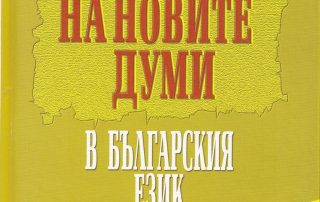
Dictionary of new words in the Bulgarian language (from the first two decades of the XXI century)

The Dictionary of New Words in the Bulgarian Language (from the First Two Decades of the 21st Century) has been published (Sofia, Nauka i Izkustvo Publishing House, 2021). The dictionary is the work of a team of authors from the Institute of Bulgarian Language "Prof. Lyubomir Andreychin”. It is the third part of a series of lexicographical reference books published since 2001, documenting the latest additions to the Bulgarian lexicon. It presents both words that have entered from other languages at the beginning of the new century (such as emoji, vlogger, blockchain) and neologisms formed on Bulgarian soil (such as blogoroman, e-identity). Also included are semantically updated words (such as cloud), new compound names and terminological combinations (such as secure school, digital inequality, circular economy, [...]
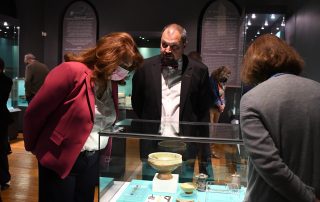
Stream through time: 8000 years of history presented at the National Archaeological Museum

On 26 May 2021, Wednesday, the National Archaeological Institute with Museum at the Bulgarian Academy of Sciences (NAIM at BAS) opened the exhibition “Stream Through Time: Rescue Archaeological Excavations along the Extension of the Gas Transmission Network of Bulgartransgaz EAD”. It presents over 400 finds from dozens of archaeological sites under the route of the gas pipeline and its accompanying structures. […]

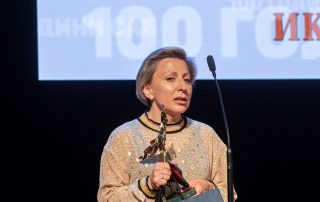
Icarus Award for Assoc. Prof. Dr. Rumyana Nikolova from the Institute of Art Studies

The book by Assoc. Rumyana Nikolova "Functioning Mode of the Bulgarian theatre in the period 1944-1989", "P. Venedikov" Publishing House 2020, was awarded the ICARUS for 2021 for a critical text by the Theatre Historians, Critics and Dramatists Guild at the Union of Bulgarian Actors. In it, the author explores theatre in Bulgaria during the communist period. The communist government carried out a total transformation in all spheres of social life. In the theatre the aspiration was its subordination to the communist ideology and its Sovietization. This goal dominated repertory choices, new Bulgarian drama, and the completed productions. The main characteristics of the model of the Bulgarian theatre in the years of communism were formulated by 1956. The period between 1948 and 1956 saw a [...]

The National Ethnographic Museum presents a new exhibition “From the edges of embroidery”

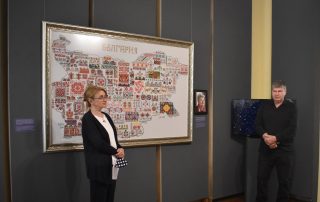
The exhibition can be visited until the end of July 2021 The National Ethnographic Museum presents its new exhibition "From the edges of embroidery", located in three halls on the first floor of the Prince's Palace. The exhibition tells the story of embroidery as a function, motifs and messages, as well as the changes that took place in the first years after the Liberation, when the embroidered parts began to be seen as Bulgarian heritage and were made into tablecloths and cushions. The main highlight of the exhibition is a map of Bulgaria in embroidery donated by Prof. Ivan Gavrilov, Head of the Breast Surgery Clinic - Oncology Hospital. Designed by his mother Velichka Kamenova and measuring 195/165 cm from a total of 144 embroideries, [...]

200 years since the birth of Georgi Stoykov Rakovski

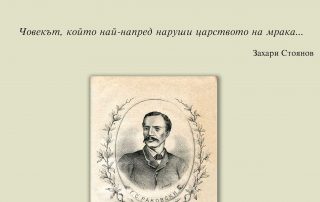
  The Bulgarian Academy of Sciences celebrates the 200th anniversary of the birth of the great revolutionary Georgi Stoykov Rakovski with a poster exhibition which is arranged in the central foyer of BAS. The exposition traces the diverse performances of the great revolutionary, diplomat, publicist, poet, scientist through books and periodicals by and about Rakovski which are stored in the rich funds of the Central Library of BAS. Old printed editions from the Revival collection (original first editions of Rakovski's own books), books from the personal libraries of Felix Kanitz (with autograph by Rakovski himself), Nikola Nachov and others were used. In the year dedicated to the life and work of the great Bulgarian, on Rakovski's Day – 14 April, when Bulgaria celebrates 200 years [...]

Ancient genomes shed new light on the earliest Europeans and their relationships with Neandertals

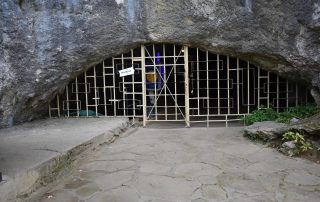
  An international research team has sequenced the genomes of the oldest securely dated modern humans in Europe who lived around 45,000 years ago in Bacho Kiro Cave, Bulgaria. By comparing their genomes to the genomes of people who lived later in Europe and in Asia the researchers from the Max Planck Institute for Evolutionary Anthropology in Leipzig, Germany, show that this early human group in Europe contributed genes to later people, particularly present-day East Asians. The researchers also identified large stretches of Neandertal DNA in the genomes of the Bacho Kiro Cave people, showing that they had Neandertal ancestors about 5-7 generations back in their family histories. This suggests that mixture with Neandertals was the rule rather than the exception when the first modern [...]

Go to Top