Multidisciplinary team from BAS applies innovative marker technologies in plant biodiversity research

DNA barcoding is a marker-based approach in which a short nucleotide sequence from the genome serves as a marker for the taxonomic identification of organisms regardless of sex, developmental stage and integrity. Analogous to the black-and-white strokes of grocery store barcodes that provide information on name, price and manufacturer, each individual in nature has its own unique DNA sequence, allowing scientists to determine its belonging to a particular family, genus, or species. […]

New low-temperature facility preserves the rich collection of the Institute of Biodiversity and Ecosystem Research

The low-temperature chamber supports the storage of specimens in the Herbarium of the Institute of Biodiversity and Ecosystem Studies of BAS. The state-of-the-art equipment is being used for the first time at the Bulgarian Academy of Sciences and is funded by the National Roadmap for Research Infrastructures. The Herbarium is the richest and most representative scientific collection for the flora of Bulgaria and South-Eastern Europe. It contains about 200 000 specimens. It is registered in the international information system for the most important herbarium collections 'Index Herbariorum' with the acronym SOM. Conservation of the collection from pests - various species of insects, mainly beetles, is among the priorities of the scientists and curators of the scientific collection. With the new chamber which maintains a [...]

2021-08-27T10:45:17+03:005 August 2021|Categories: Biodiversity, Bioresources and Ecology|

June – month of herbs

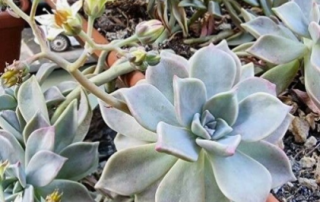
Medicinal plants are one of the greatest treasures of our country. The first step for the conservation and sustainable use of this wealth is well knowing it. The Institute of Biodiversity and Ecosystem Research has established an ex situ collection of medicinal and essential oil plants which is maintained and updated with new species every year. The collection includes rare and endangered species such as Mursala tea, marsh snowdrops, haberlea rhodopensis, alkanna tinctoria, elecampane, shrubby cinquefoil and others. […]

2021-06-23T11:49:07+03:0021 June 2021|Categories: Biodiversity, Bioresources and Ecology|

The development of the Arabian Desert as a driver of megafaunal exchange between Eurasia and Africa over the last ten million years

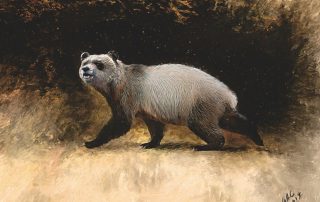
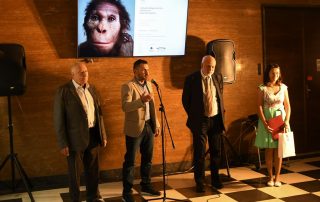
An international team of paleontologists, in which one of the lead authors is Prof. Nikolai Spassov from the National Museum of Natural History of BAS, has published new data and arguments for the dispersal of mammalian fauna and our human ancestors from Eurasia to Africa millions of years ago. Zagros Mountains in Iran on the border with Mesopotamia (photo by Prof. M. Böhme) The idea that the formation of Sahara and the Arabian Desert was once a barrier to faunal exchange between Eurasia and Africa was put forward in the 1980s. At the same time, according to another hypothesis from the late nineties, the roots of today's mammalian fauna of the African savanna are linked to the "Pikermian" savanna biome of the Late [...]

2021-06-04T10:27:54+03:0031 May 2021|Categories: Biodiversity, Bioresources and Ecology|

140 years since the birth of Acad. Metodi Popov

A close friendship connects our great scientist with Albert Einstein April 29 marks the 140th anniversary of the birth of Acad. Metodi Popov. The great Bulgarian biologist was born in 1881 in Shumen, and his brother was the mathematician Acad. Kiril Popov. Both are individuals with broad interests in science and the arts. They were involved in classical music since childhood, playing the cello and the violin. Acad. Metodi Popov graduated in biology at Sofia University, and later specialized in biology, comparative anatomy and parasitology in Munich with the world-famous scientist Richard Hertwig. He held a PhD from the University of Munich and worked as an assistant professor of zoology and comparative anatomy. He continued his specialization in microbiology at the Robert Koch Institute in [...]

2021-05-10T10:26:46+03:0028 April 2021|Categories: Biodiversity, Bioresources and Ecology|
Go to Top