
Scientists from the Academy will deliver plenary presentations at the two-day event
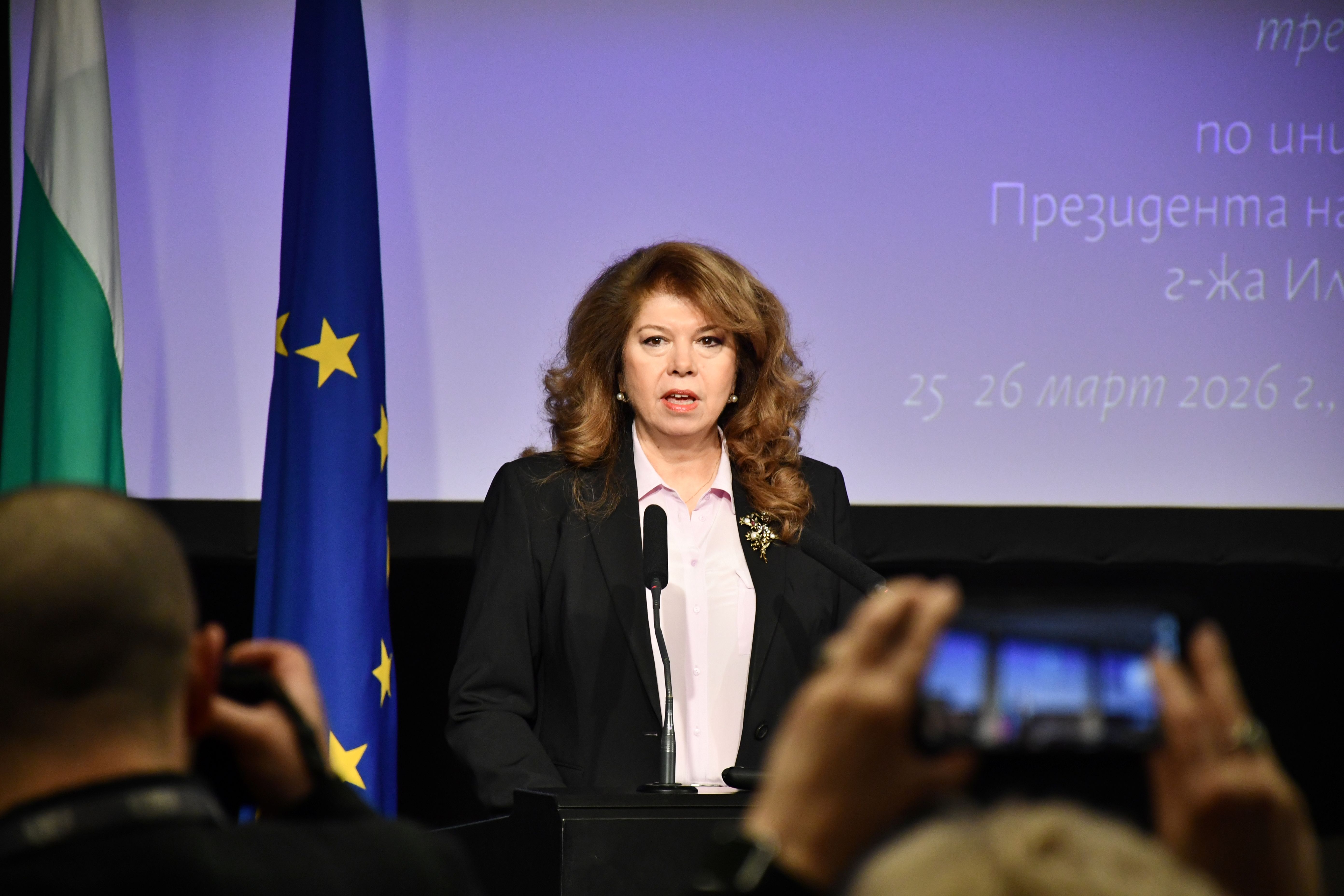
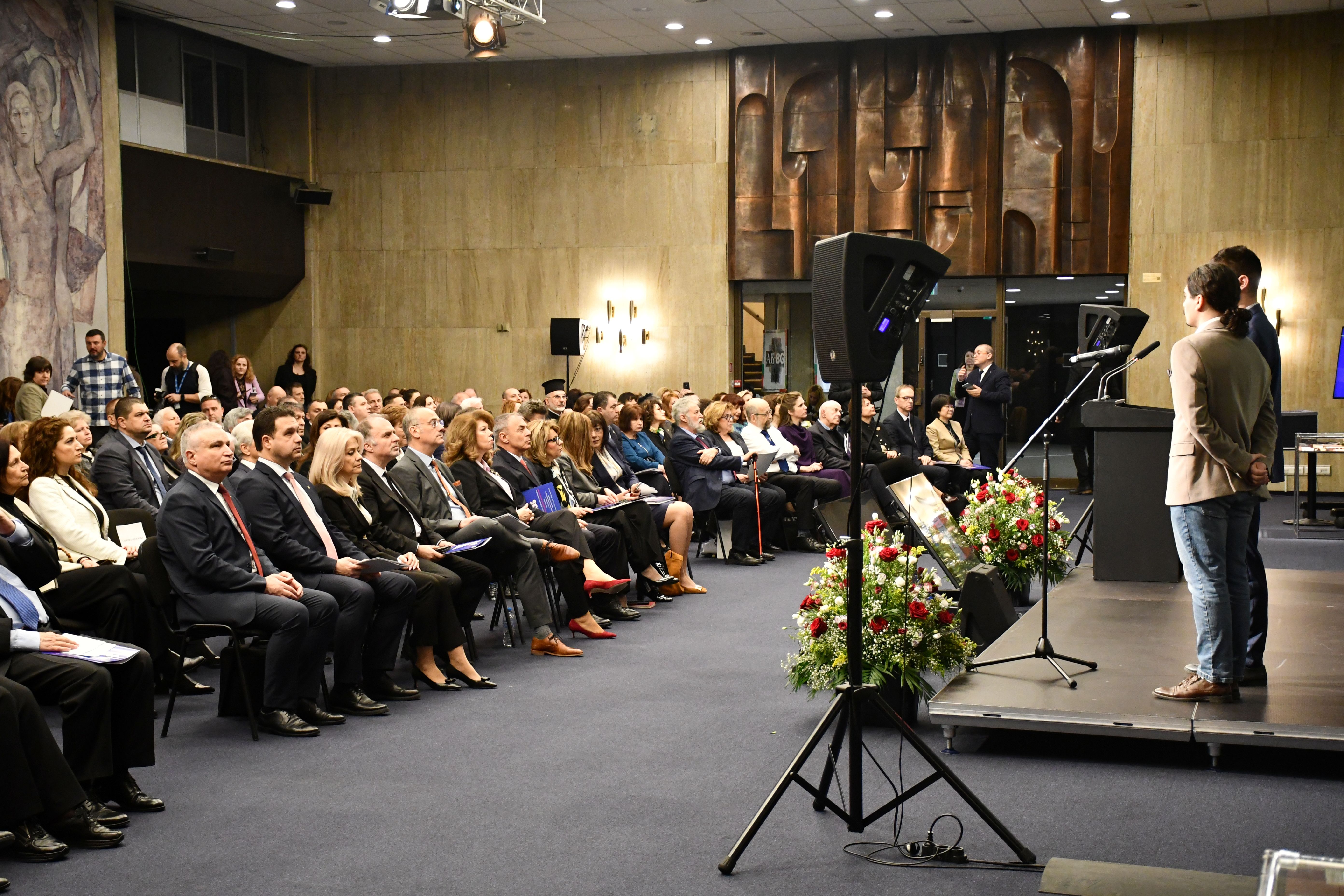
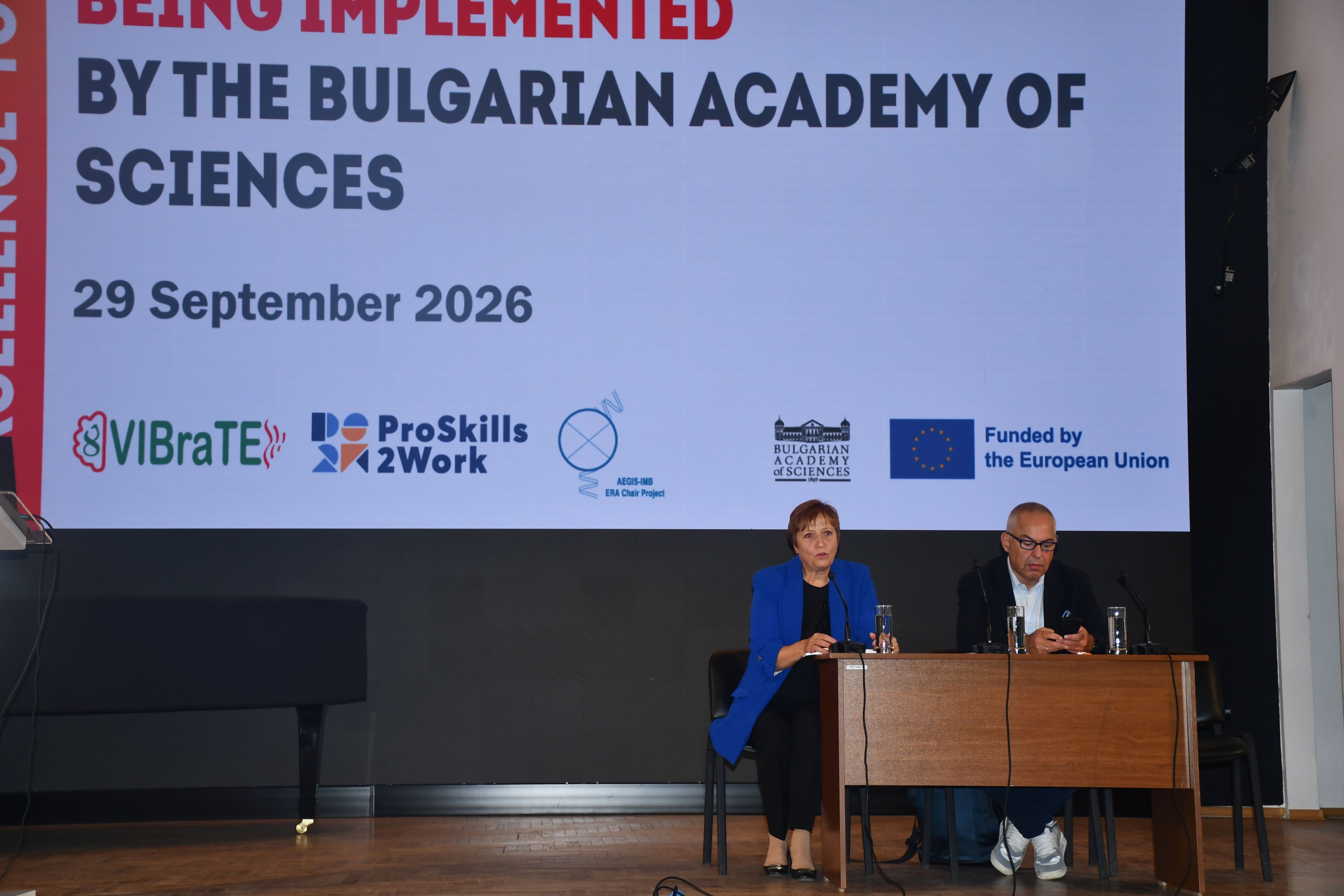
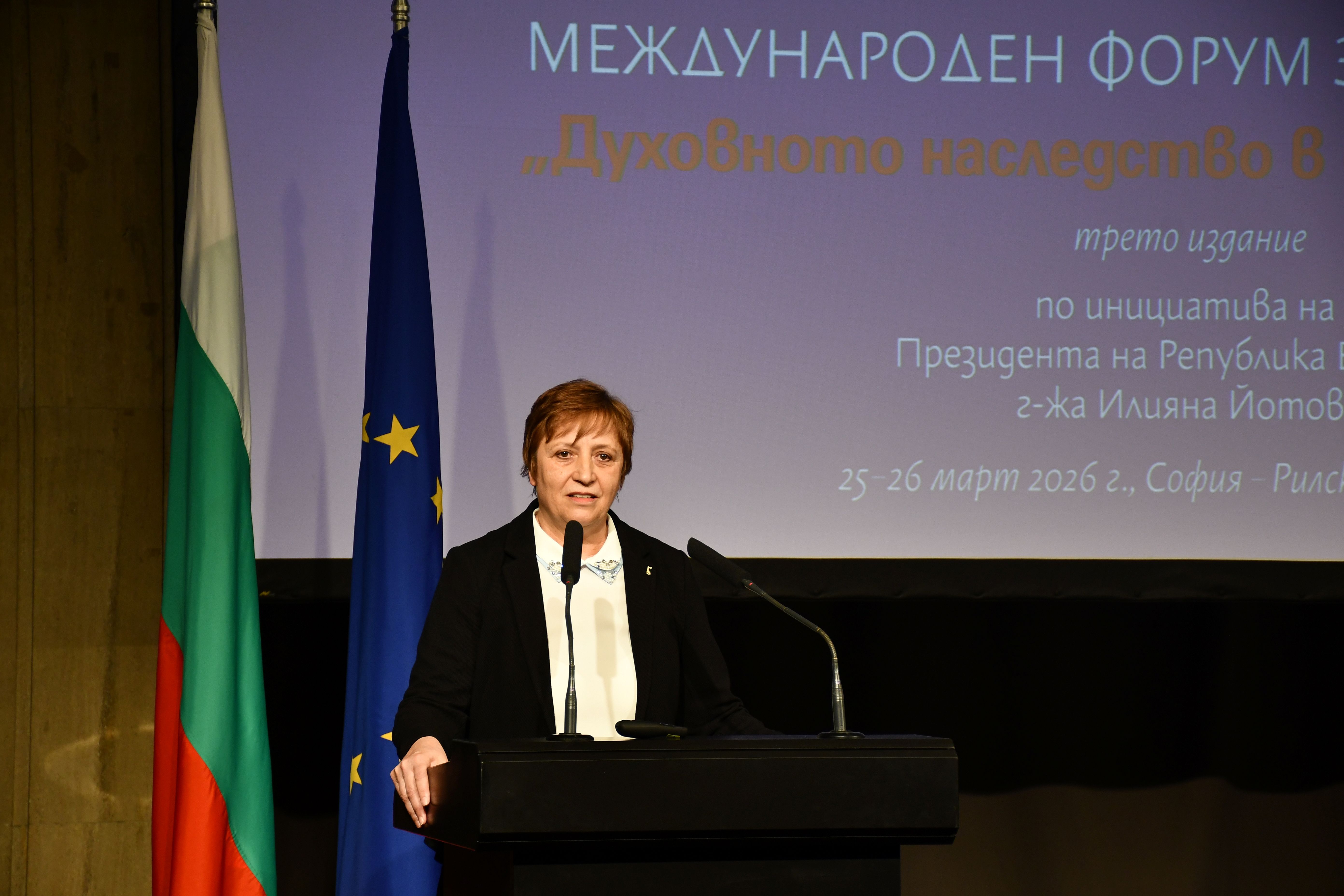
The President of the Bulgarian Academy of Sciences, Corresponding Member Evelina Slavcheva, participated in the third international forum on the Cyrillic alphabet, “Spiritual Heritage in the Digital Age,” organized by President Iliana Iotova. The opening ceremony took place at the National Palace of Culture. Corr. Memb. Evelina Slavcheva delivered a welcoming address in which she emphasized that the forum had become an important part of the academic calendar. Scholars from various countries are sharing their research with the general public, reinforcing the foundations of our national identity’s self-esteem, she said in her speech. The enduring elements of this self-confidence are culture, religion, and letters, and the affirmation of the Cyrillic alphabet as the “Bulgarian alphabet” is a mission for the young generation of researchers and patriots, the BAS president further noted.
In her welcome address to the participants and guests of the event, Corr. Memb. Evelina Slavcheva stated: “I very much hope that young people, in particular, will never forget that all of Southeast Europe owes its literacy and Christianization to medieval Bulgaria, and that thanks to the spread of the Glagolitic alphabet, and later the creation of the Cyrillic alphabet for the translation of liturgical books and the creation of literature, a powerful tool was actually created to spread the light of knowledge among vast masses of Europeans, and that at the foundation of all this lies the Old Bulgarian language which has only recently been rather inaccurately called Church Slavonic.”
President Iliana Iotova opened the third edition of the international forum on the Cyrillic alphabet organized at her initiative. “Our mission is to ensure that the voice of ancient Slavic culture, Bulgarian studies, and the Bulgarian language is heard more clearly around the world,” said the head of state. Now more than ever, we need to talk about their priceless spiritual heritage, and through it, about our future, Iliana Iotova emphasized.
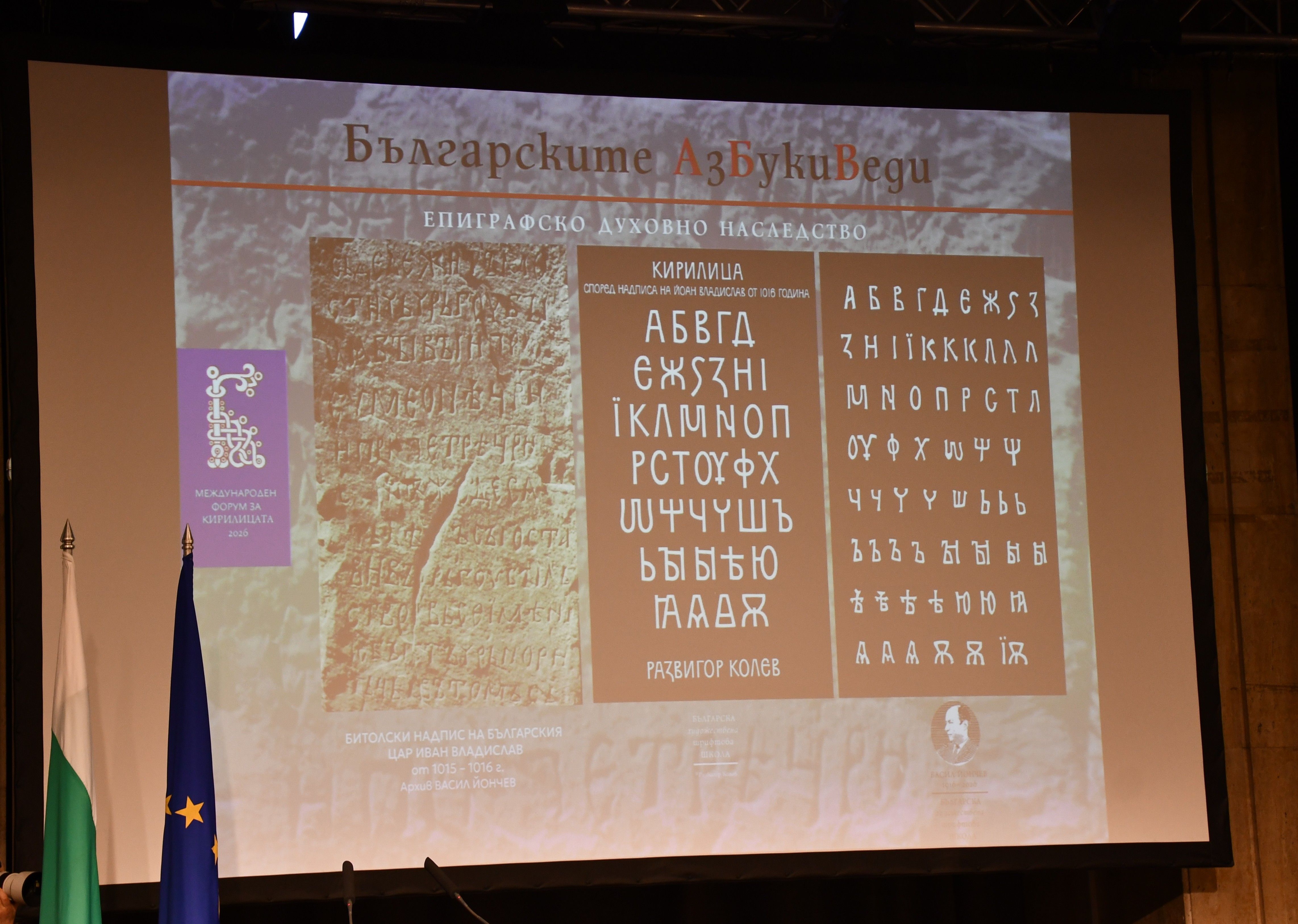
Some time ago, we undertook the task of bringing the topic of Bulgarian language studies back onto the agenda in Bulgaria and on a global scale, noted President Iotova, recalling the first two editions of the conference on the Cyrillic alphabet. In 2022, the forum “… And We, Too, Have Given Something to the World” took place. The event focused on the Bulgarian state’s contribution to the creation and spread of the Cyrillic alphabet and its mission to connect the East and the West. The second forum, “Alphabet. Language. Identity” held in 2024, focused on the significance of the Slavic heritage, its preservation and dissemination in the modern world, as well as Bulgaria’s key role in the creation of the third Christian civilization – the Slavic one.
Head of State Iotova thanked the President of BAS, Corr. Memb. Slavcheva, for the consistent support of the initiative by the Academy’s scholars.
Greetings during the opening were delivered by the acting ministers of education and science, Sergei Ignatov, and of culture, Nayden Todorov, as well as by the director of the “Sts. Cyril and Methodius” National Library, Assoc. Prof. Kalina Ivanova, Ph.D.
Scholars from the Bulgarian Academy of Sciences and Bulgarian universities, along with speakers from Germany, Italy, Poland, Romania, Hungary, Kazakhstan, and China, are participating in the forum. The topics of the presentations relate to the alphabet wars in the Slavic world, the language of the media, and the digitization of incunabula editions in the 21st century. Students from the National High School for Ancient Languages and Cultures are presenting their views on the Cyrillic alphabet and artificial intelligence. The Third International Forum on the Cyrillic Alphabet expands the geographical scope of the debates with studies on the Cyrillic alphabet in China and on contemporary Cyrillic writing among Turkic-speaking peoples. On March 26, participants will continue their academic program at the Rila Monastery. The focus is on the commemorative anniversary associated with St. John of Rila (St. Ivan Rilski) – 1,080 years since his dormition.