
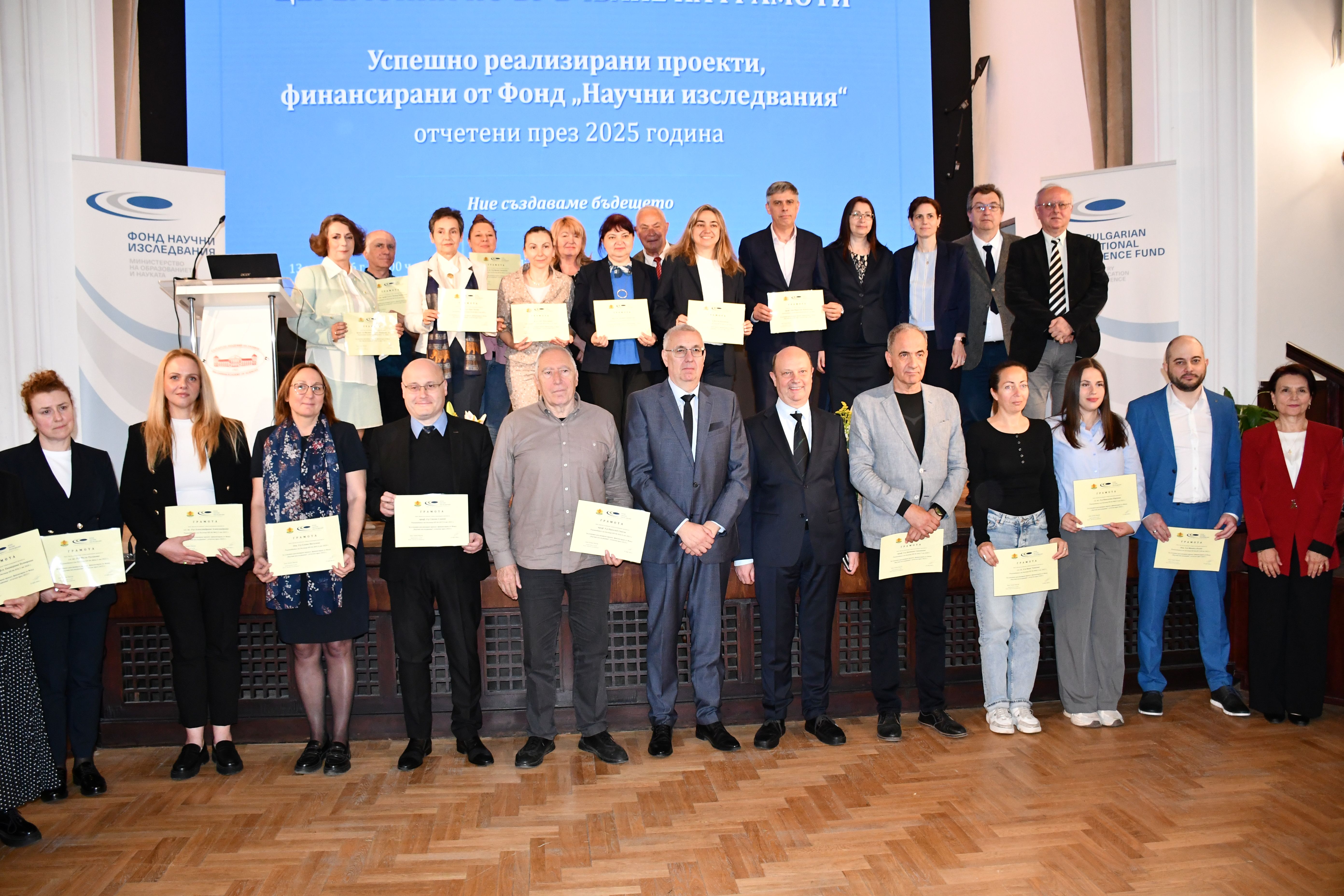
The Bulgarian National Science Fund honored 22 projects in 11 scientific fields at an official ceremony held today at BAS. The Fund’s scientific expert committees selected two projects in each scientific field.
The project “Algebraic, Combinatorial, and Geometric Problems in Coding Theory,” led by Corresponding Member Peter Boyvalenkov, Director of the Institute of Mathematics and Informatics at BAS, was recognized as the most successful project in international collaboration.
The award for best project in the scientific field of “Biology” went to the project led by Prof. Jana Tchekalarova, PhD, Deputy Director of the Institute of Neurobiology, in partnership with the Institute of Biophysics and Biomedical Engineering – BAS and the Medical University – Pleven.
The project led by sen. asst. prof. Dr. Tzveta Stoyanova from the Institute of Neurobiology – BAS was recognized as the best project in the scientific field of “Medical Sciences.”
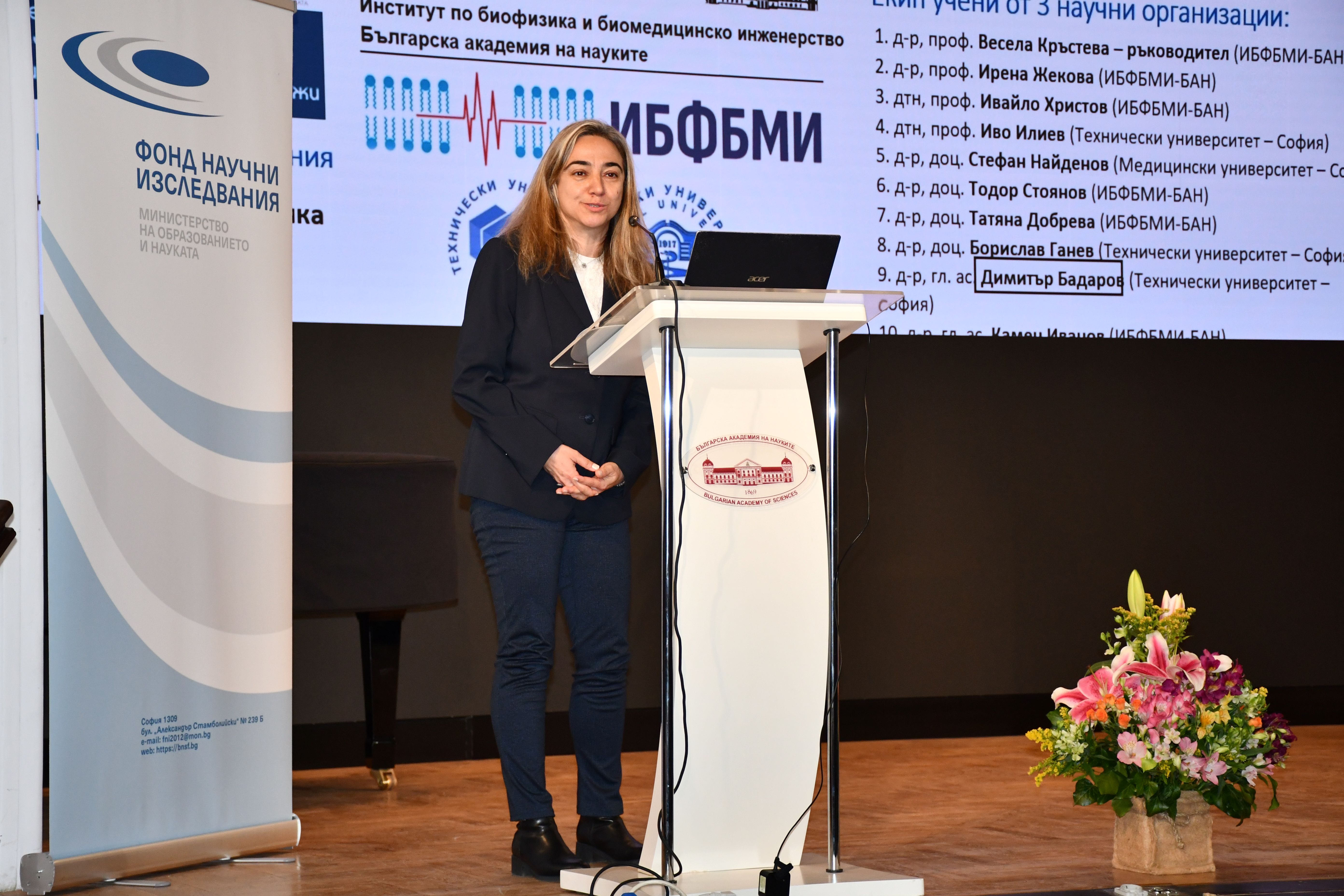
In the scientific field of “Mathematical Sciences and Informatics,” the project “Computer aided diagnosis of cardiac arrhythmias based on machine learning and deep neural networks,” led by Prof. Vessela Krasteva, PhD, of the Institute of Biophysics and Biomedical Engineering – BAS was awarded.
The project “The Lexical Richness of Constantine of Preslav’s Didactic Gospel: Old Bulgarian-Greek and Greek-Old Bulgarian Indexed Dictionaries” was honored in the scientific field of “Humanities.” The project is led by Prof. Lora Taseva, PhD, from the Institute of Balkan Studies with the “Prof. Alexander Fol” Center of Thracology – BAS.
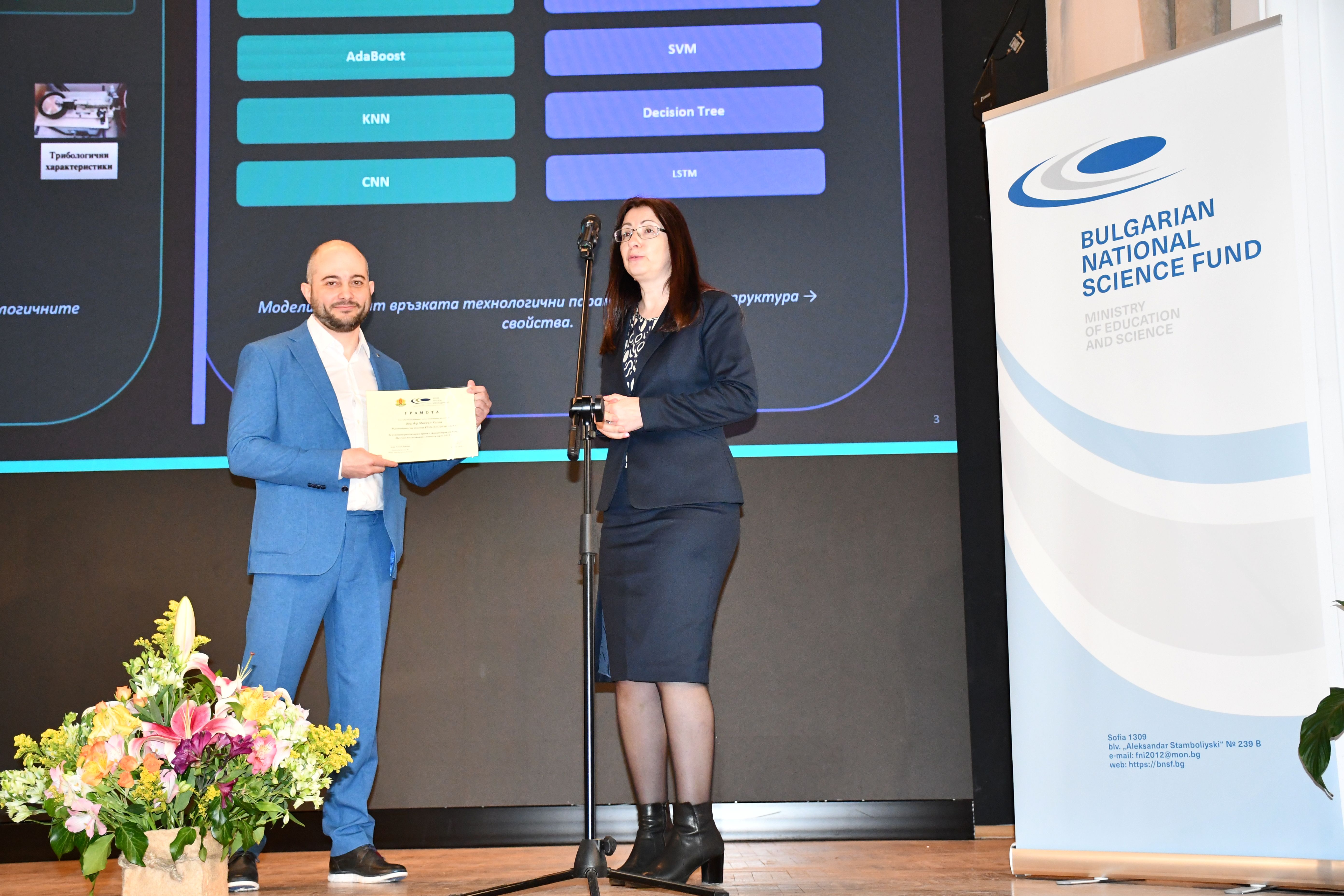
In the scientific field of “Technical Sciences,” the project “Development of a new type of self-lubricating metal-composite anti-friction materials with improved mechanical and tribological properties,” led by Assoc. Prof. Mihail Kolev, PhD, from the “Acad. A. Balevski” Institute of Metal Science, Equipment and Technologies with the Center for Hydro- and Aerodynamics – BAS.
The project “Natural and anthropogenic factors of climate change – analysis of global and local periodic components and long-term forecasts,” led by Corr. Memb. Ekaterina Bachvarova from the of Climate Atmosphere and Water Institute – BAS, was the best in the scientific field of “Earth Sciences.” The second award-winning project in this field was by Prof. Nikolai Spassov from the National Museum of Natural History – BAS on the topic: “From dinosaurs to the earliest human ancestors: fundamental studies of significant moments in the history of fauna and human origins.”
In the scientific field of “Physical Sciences,” the project by sen. asst. prof. Dr. Vani Tankova from the Institute of Solid State Physics – BAS was recognized. The project’s topic is: “Spectroscopic identification of pigments used to decorate Neolithic and Chalcolithic pottery using laser-induced breakdown spectroscopy (LIBS) and Fourier-transform infrared spectroscopy (FTIR).”
The project “Experimental studies, modeling, and optimal technologies for the biodegradation of agricultural waste with hydrogen and methane production,” led by Assoc. Prof. Elena Chorukova, PhD, from the Institute of Microbiology – BAS, received a certificate for the best project in the scientific field of “Agricultural Sciences.”
In the scientific field of “Chemical Sciences,” the winning project was submitted by sen. asst. prof. Dr. Nikoleta Kircheva from the “Academician Jordan Malinowski” Institute of Optical Materials and Technologies – BAS.
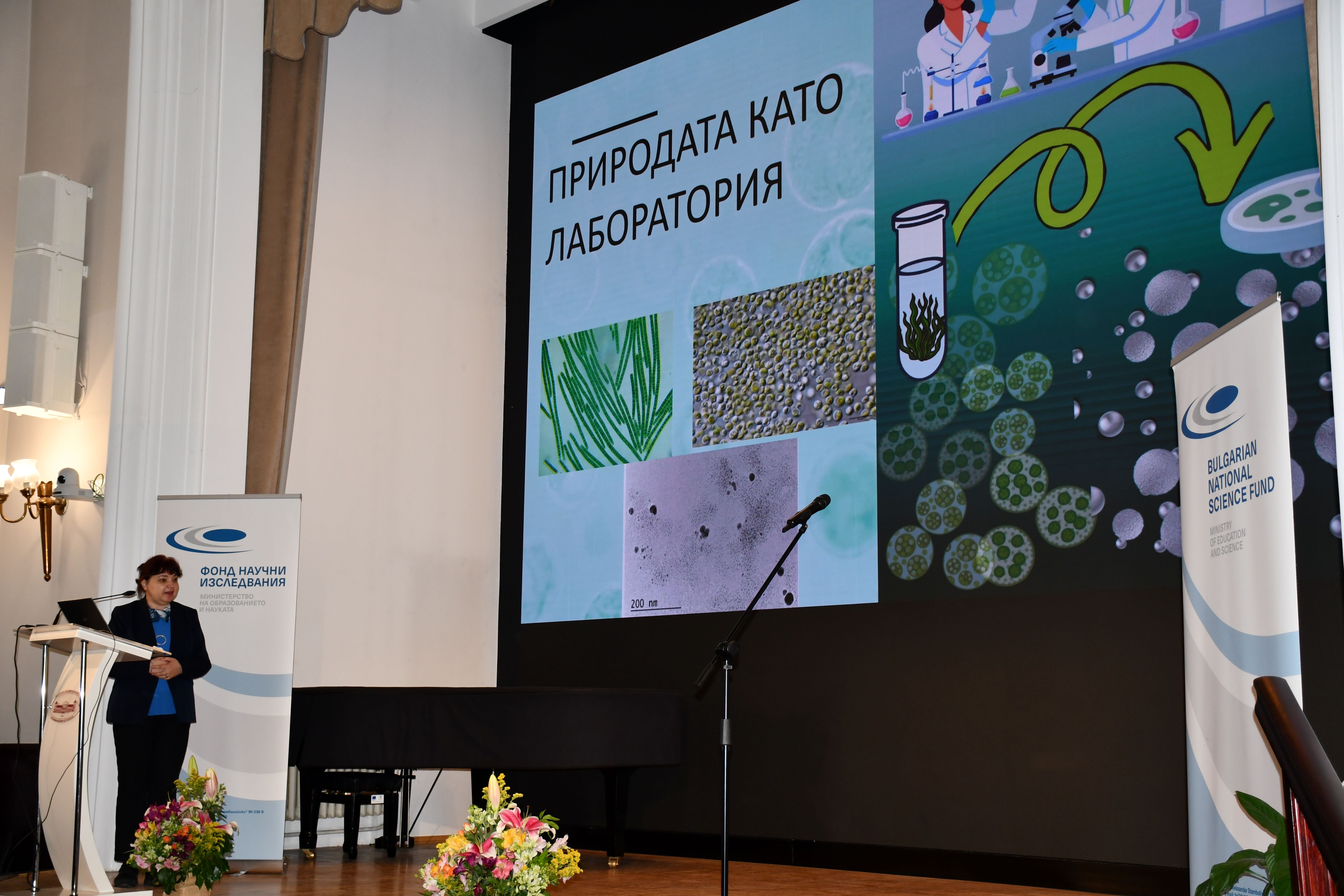
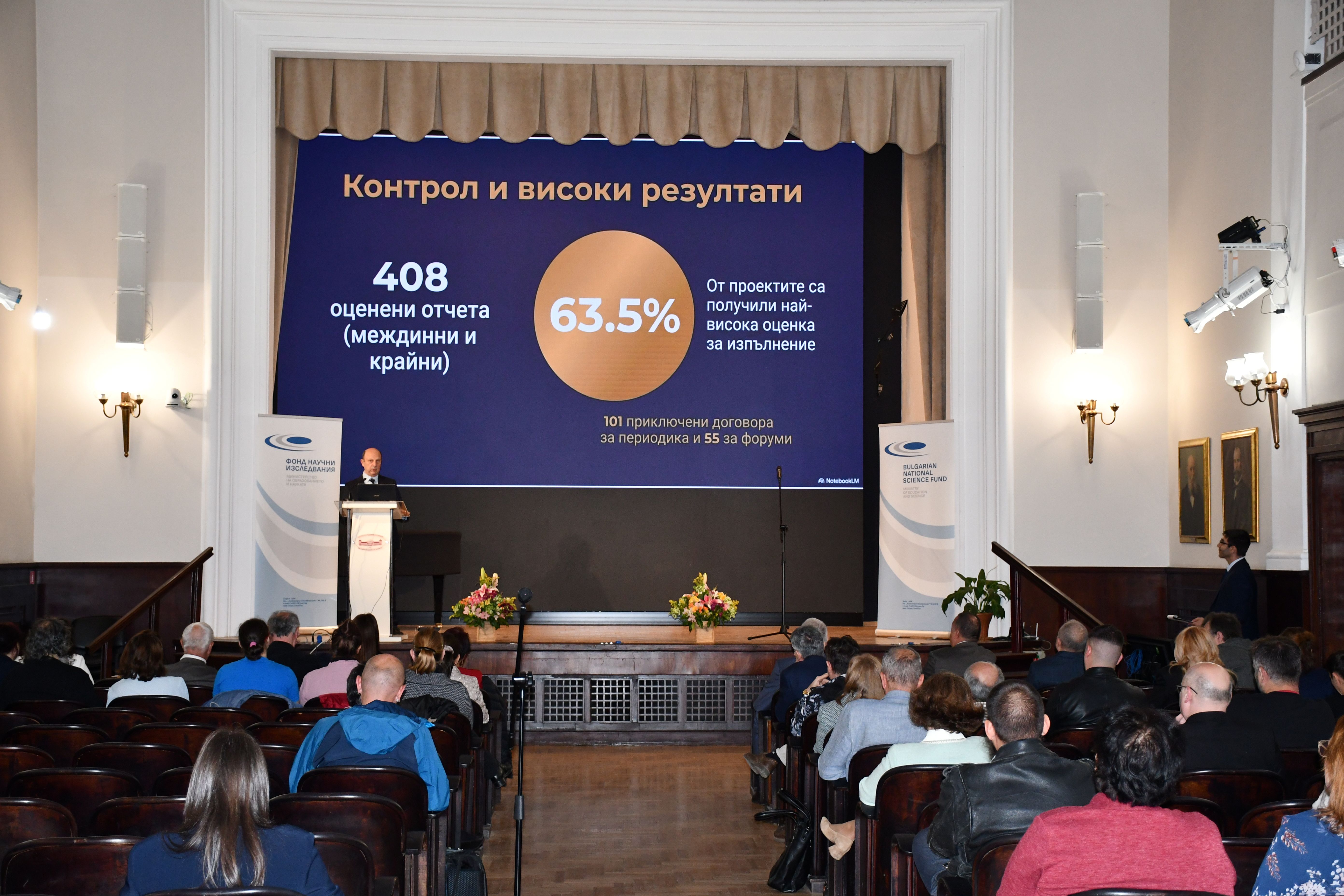
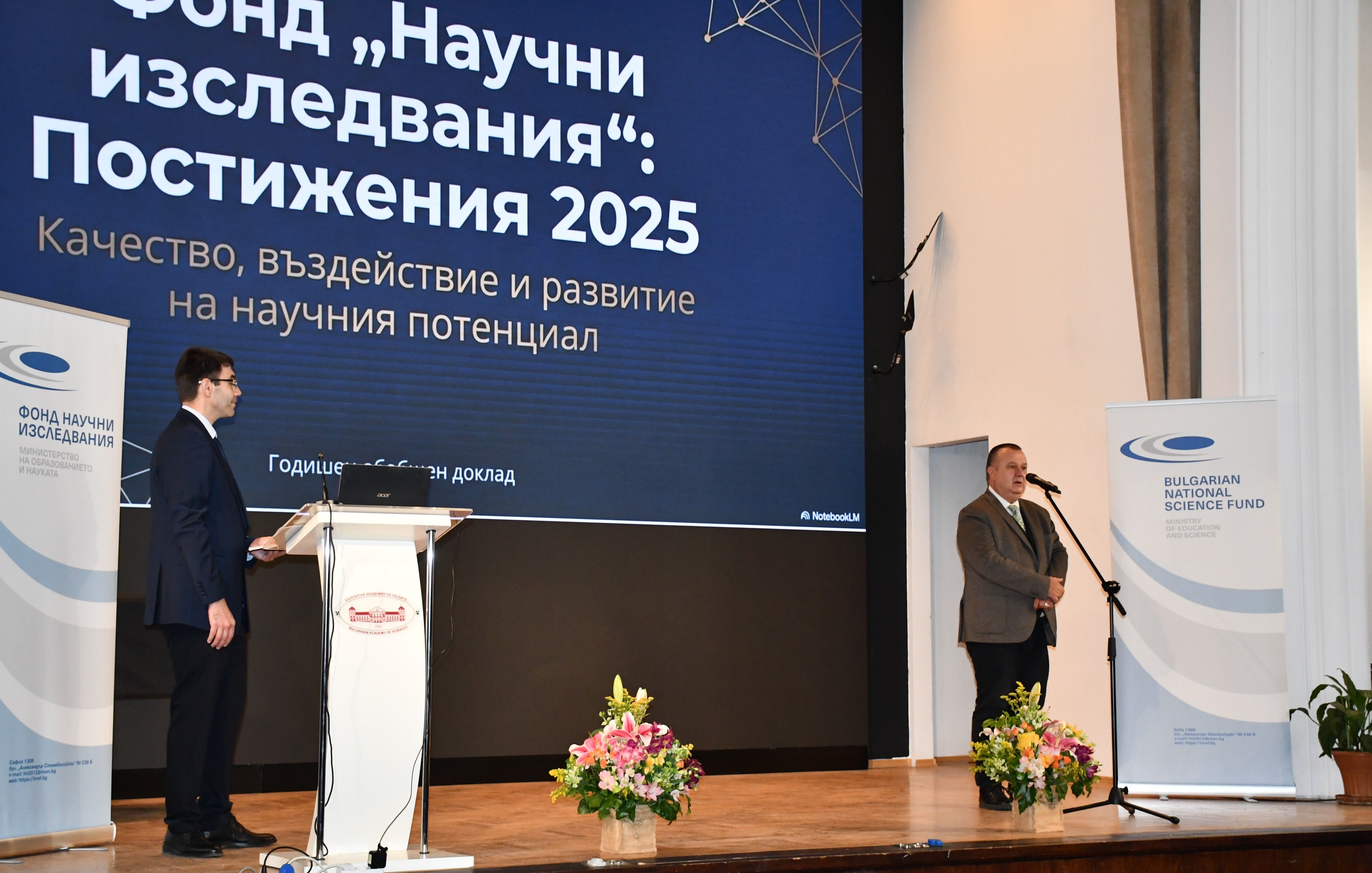
The ceremony was officially opened by the Fund’s director, Prof. Yuri Kalvachev, DSc, who presented the Fund’s activities over the past year. He noted that over 20.1 percent of the articles indexed in Scopus included acknowledgments to the Fund. In 2025, 2,800 articles were reported, of which 1,735 were published in high-impact-factor journals. Over 243 research teams were supported, 15 competitions were held, 46 international forums were organized, and 79 scientific journals were published. Over 450 people from Bulgaria and abroad were recruited as independent evaluators.
“I am particularly proud of the fact that the scientific expert committees have recognized projects by young scientists among these awards. About 30 percent of the awarded projects are led by young scientists in postdoctoral positions,” said Prof. Kalvachev. He noted that the number of submitted project proposals has increased compared to previous years and added that this year’s prize fund had also been increased.
The Vice-President of BAS Prof. Emmanuel Moutafov also addressed the attendees. “The Bulgarian Academy of Sciences, especially in recent years, has been a very significant player in the field of knowledge and specifically in science,” he said.
Among those in attendance were the Chair of the Fund’s Executive Board, Acad. Atanas Pavlov; members of the Fund’s Executive Board; rectors and vice-rectors of universities, directors of BAS institutes, members of research teams, and the event’s host – Assoc. Prof. Vladimir Bozhilov, Vice-Dean of the Faculty of Physics at Sofia University “St. Kliment Ohridski.”